The trace: the record of what the agent did
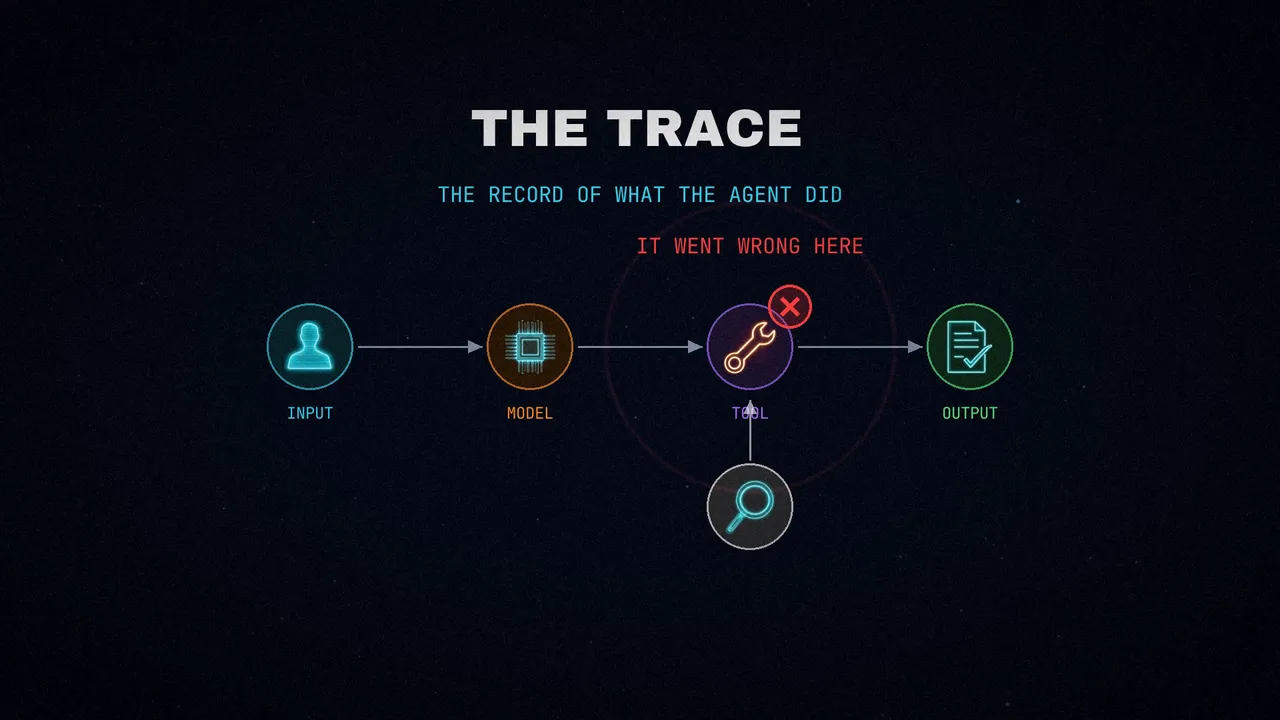
Every time an agent works, it leaves a trail. The trace is the system of record of what it did: what the user wanted, which steps the agent took and what outcome it reached.
The simplest use is debugging: you look at the sequence of steps and find where things went wrong. But traces keep getting longer, because agents do more, and there are more of them, because agents are reaching production. Reviewing them by hand no longer scales.
To use those traces to keep improving agents, LangChain says you need two things:
- An efficient database, optimized for agent traces.
- “Intelligent compute”: something able to query and process those traces.
They have been working on both for nearly two years. The first big piece they launched was SmithDB, a database built specifically for traces. Over the past few months they have focused on the second.
What an agent lake is
Why do you need intelligence to analyze data? Because a trace is not a table of numbers: it is the trail of unstructured reasoning, written in natural language. To understand it, you need something that can reason too.
Here comes the analogy. Traditional data engineering has the data lake: a shared store of a company's data that different engines query and process. While building LangSmith, LangChain noticed its platform converging on the same shape: underneath, a shared corpus of agent data stored in SmithDB; on top, many different kinds of intelligent compute running over it.
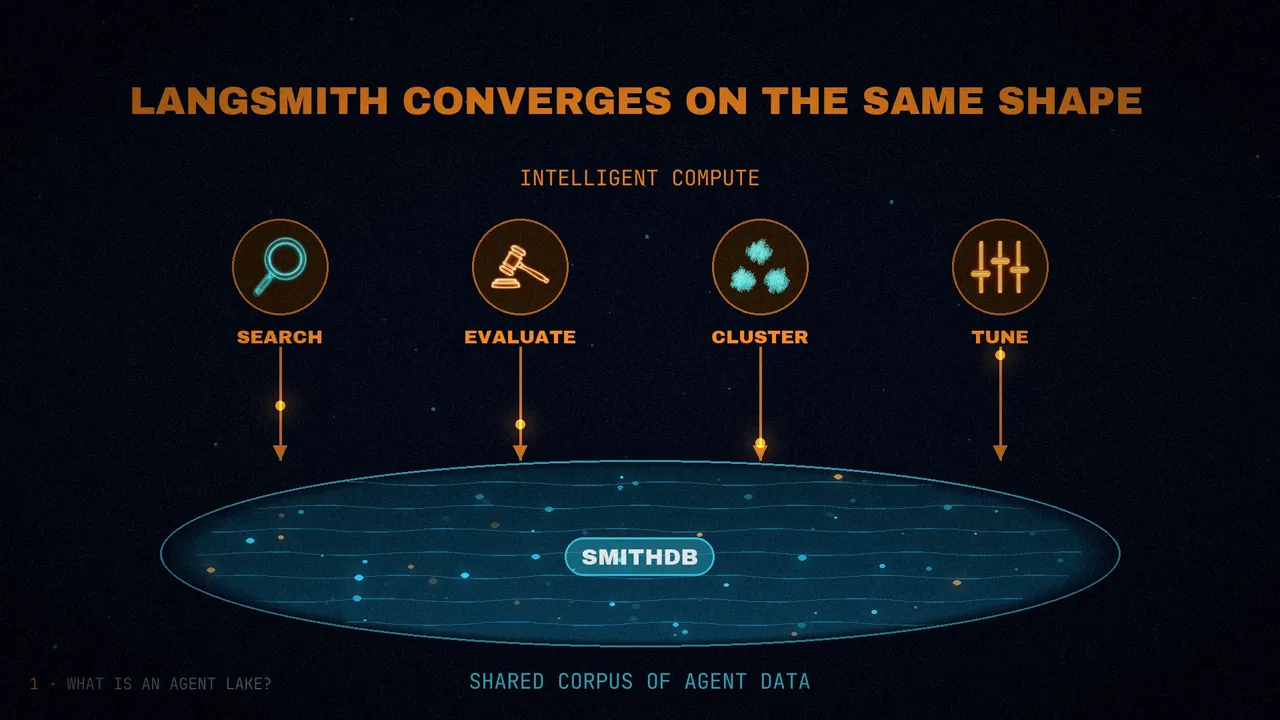
So why not use the usual data lakes, like Snowflake or Databricks? According to LangChain, neither their storage nor their compute is designed for agent traces, and more and more of what a company generates will be traces. So they name the new category:
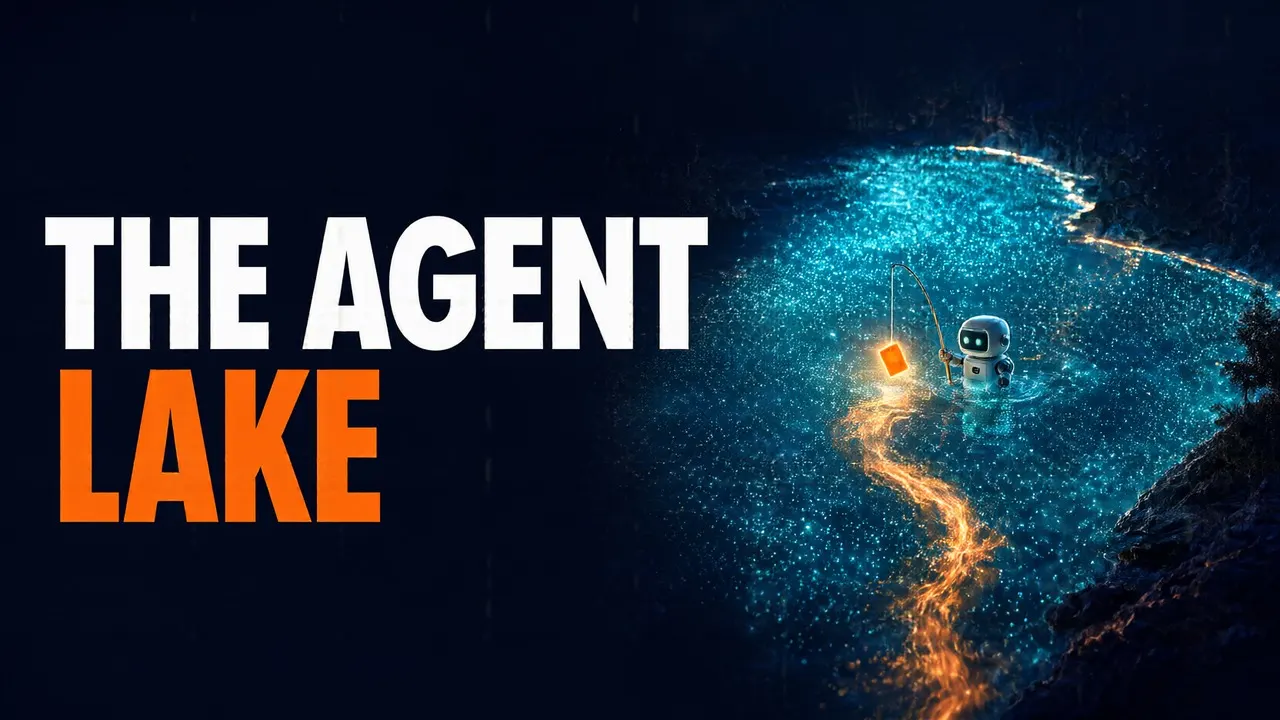
Agent lake: a platform that combines storage optimized for agent traces with intelligent compute to query, analyze, and learn from them, powering continuous agent improvement.
What is inside the lake
Mostly traces. A trace records every step of a run: the user's input, each model call, each tool call and the final output. When a conversation has several turns, traces are grouped into threads so you can read the whole interaction at once.
How many? According to LangChain, LangSmith ingests traces from billions of agent runs per month, and some customers, like Clay, send hundreds of millions of events per day. That scale is why SmithDB exists; LangChain describes it as the industry's most performant database for real-time work on agent traces. That is their claim; the article does not publish a comparison.

Outcomes
The lake does not hold only traces: it also holds outcomes. The trace shows you how the agent worked; the outcome shows you the impact of that work. The article suggests thinking about them in two ways.
What they map to. Some map one to one to a trace or a thread: a thumbs down on a response says that response, on that turn, was bad; a low score for a whole conversation says the entire thread was bad. Others map many to many. LangChain recently added a coding agents type to LangSmith, and one outcome they track there is merged pull requests: one thread may open many PRs that get merged, and many threads may contribute to a single PR.
Where they come from. There are four sources:
- The user, directly: the thumbs down.
- The system the agent works with: merged code, a snippet someone copied.
- A model acting as a judge (LLM-as-a-judge), which generates an automatic proxy for the outcome.
- The developers themselves, labeling threads by hand in annotation queues.
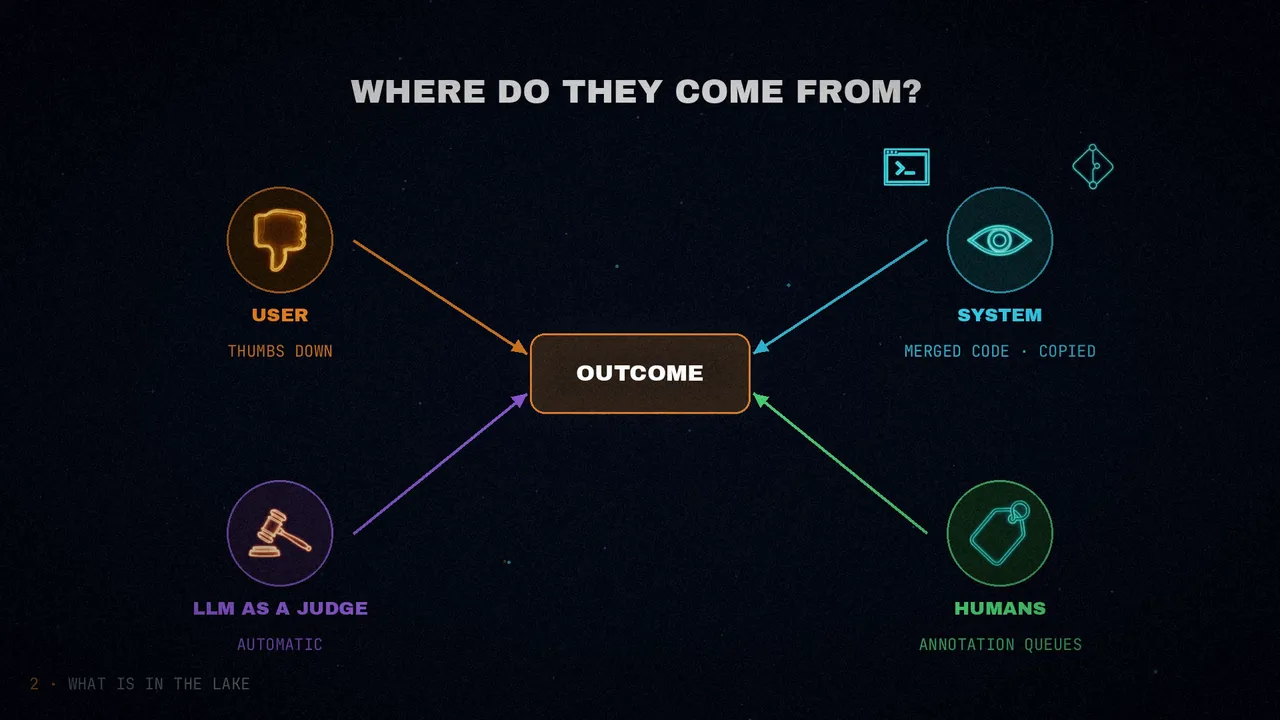
This is the article's key point: an agent lake holds not just traces, but outcomes too. They are how you judge the return on investment and tell whether your agents are working, or actually improving.
Finding high-signal traces
According to LangChain, teams running agents at scale need intelligent compute for two things: drilling down to find the traces worth looking at, and automating the agent improvement loop. Their diagram sums it up as a loop: agents in production send traces to the lake, tools analyze them, and improvements flow back to the agents.
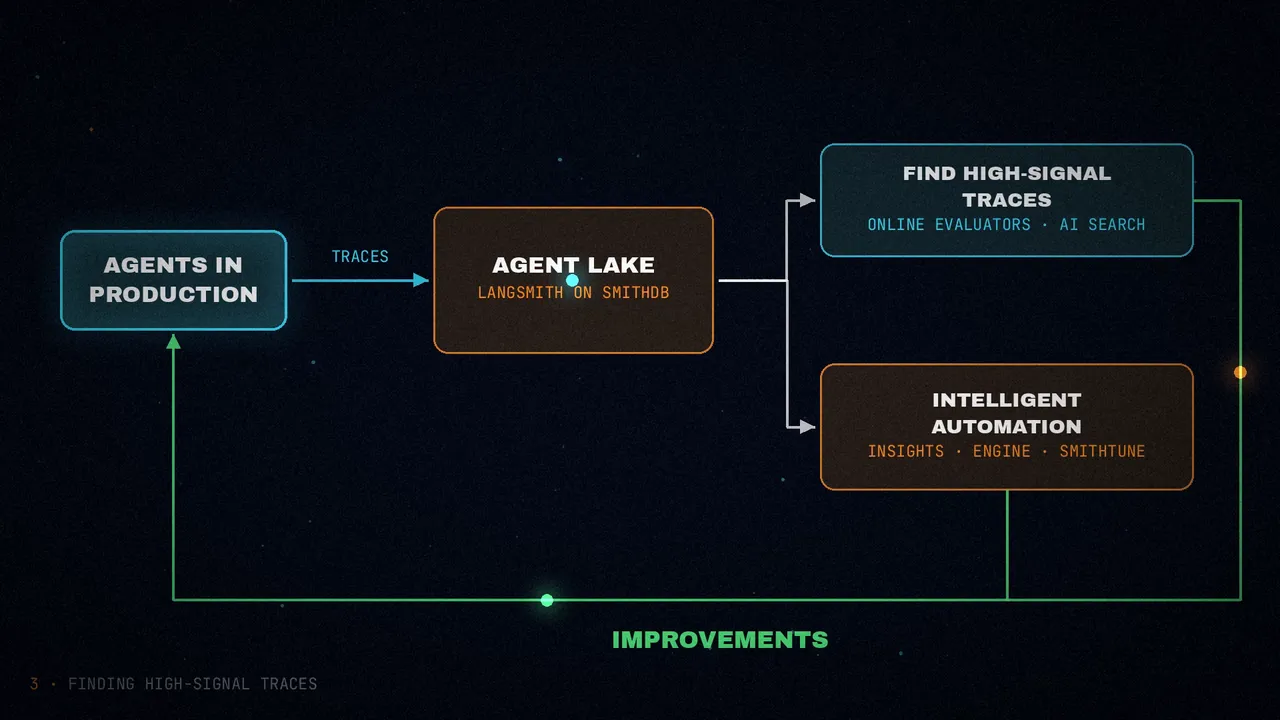
In the early days of LangSmith, developers went through traces one by one to check that the model followed instructions at every step. At scale, that is no longer possible. The starting point is online evaluators: they review traces as they arrive and flag the ones most useful for improving the agent. LangSmith ships tuned evaluator prompts in four groups:
- Security: PII leakage and prompt injection.
- Safety: toxicity, bias and fairness.
- Quality: hallucination and correctness.
- Conversation: user satisfaction and perceived errors (at thread level).
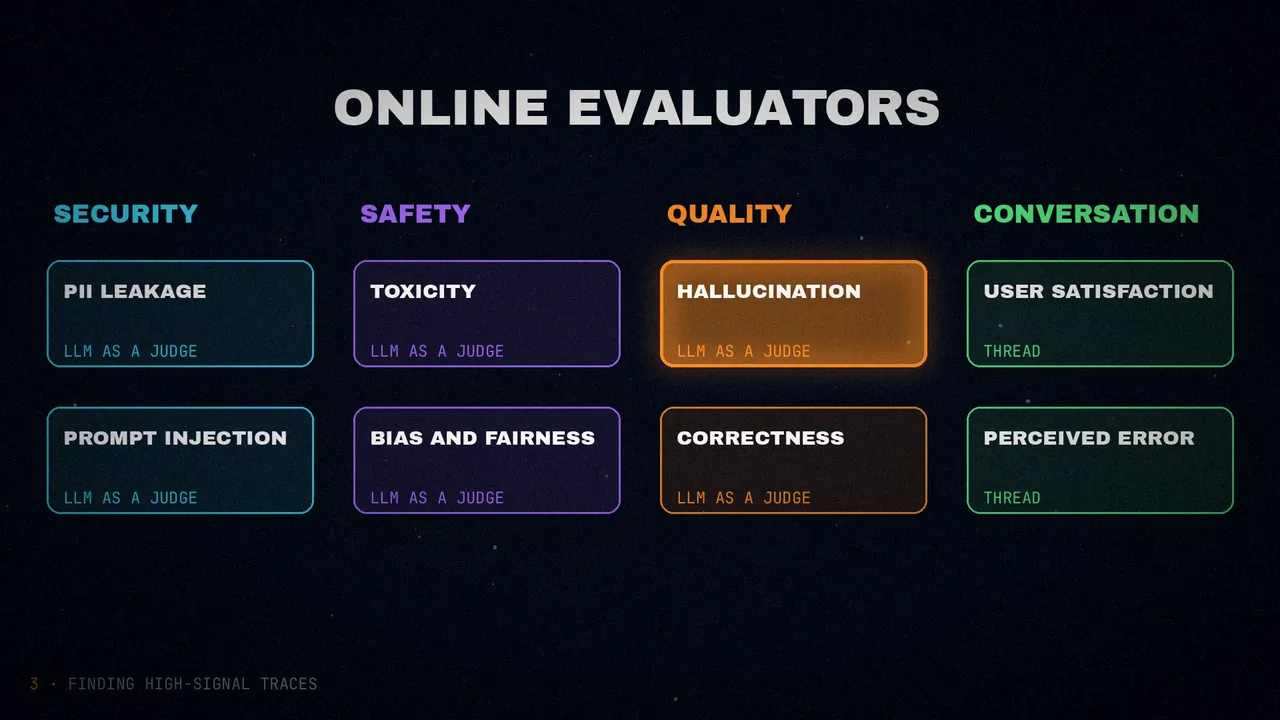
The article stresses not to use them blindly: make sure they capture signals that matter for your use case, and adjust them if they do not.
There is a hurdle: running an LLM judge on every production trace is expensive. In September, TypeSafe AI introduced decision models, a way to evaluate production traces at lower cost, and LangSmith now offers several for affordable trace classification. The article gives no cost or accuracy figures against an LLM judge; it says these cheap but intelligent evals are an area they are still actively researching.
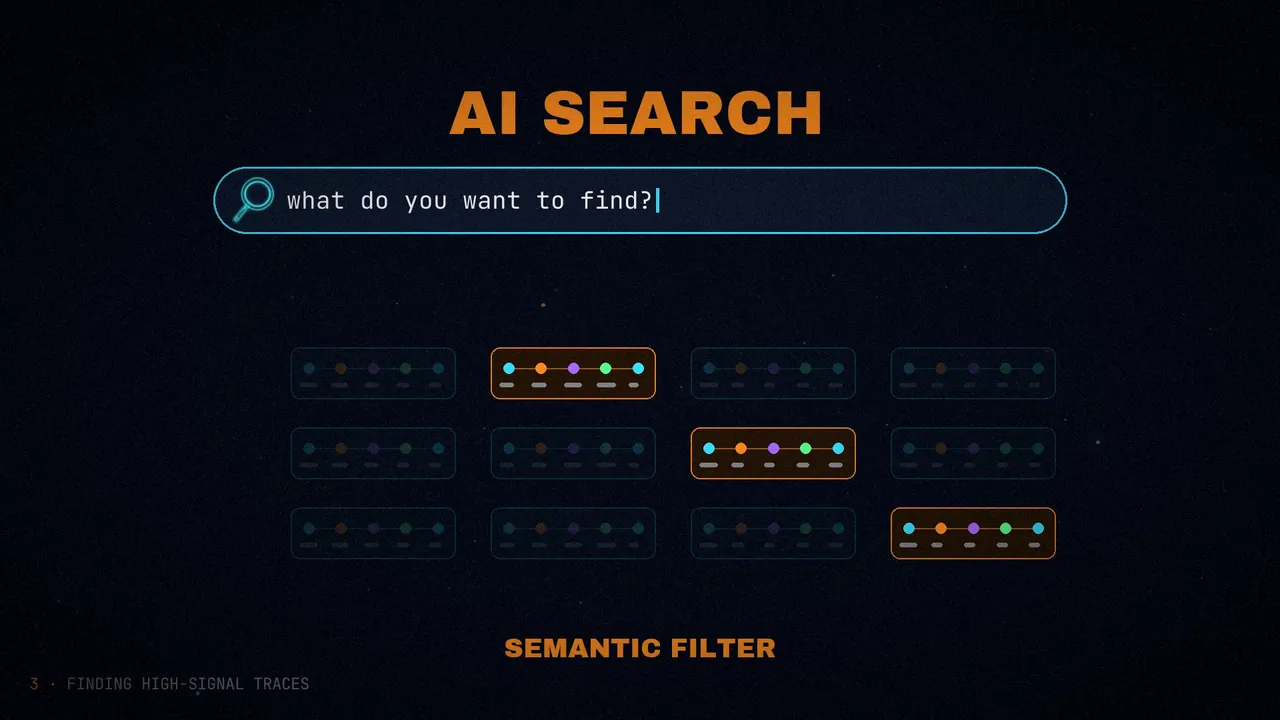
Evaluators leave feedback on each trace, so finding the relevant ones is as easy as filtering on it. The catch: you have to decide up front what to measure. To search in the moment, without first creating an evaluator, there is AI Search: you search traces in natural language and a fast, cheap decision model runs over the results and adds a semantic filter. You can ask for “threads where the user got frustrated” or “traces that contain PII”, and combine it with normal structured queries.
Automating improvement
Finding high-signal traces is only one part of the loop. Someone still has to figure out what they mean and what to change in the agent. At its customers' volumes, LangChain says that has to be automated too, so it built agents of its own:
- Insights shows how people actually use your agent. You ask about your traffic (“where is my agent failing?”), it groups recent traces into categories and keeps sorting new conversations into them as they arrive, so you can see which kinds of requests are trending the wrong way.
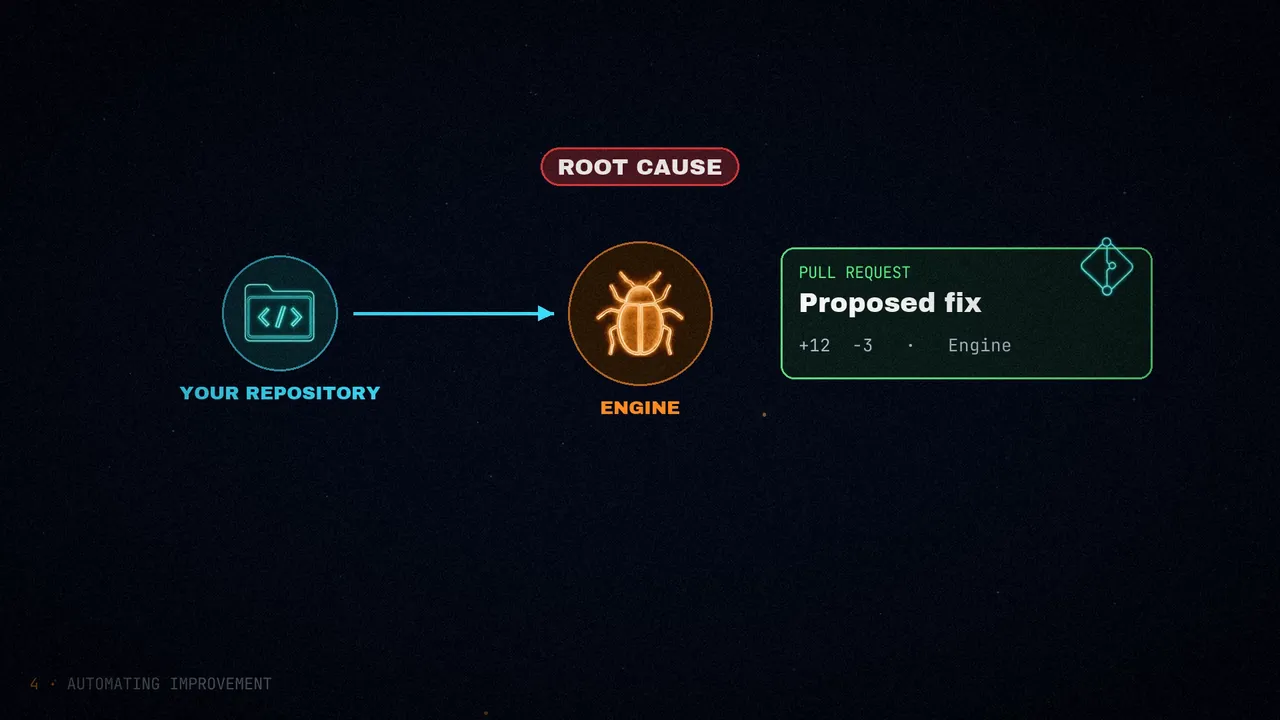
- LangSmith Engine looks for concrete problems to fix. On a schedule it scans your traces and groups recurring failures into issues, using evaluator scores and user feedback to decide where to look. With a repository connected, it diagnoses the root cause and proposes a fix as a pull request; since v2 it can test that fix against an eval set before your team sees it. Merging is still your call. According to LangChain, Engine has analyzed more than 60 million production traces across its customers.
- SmithTune is for when the agent keeps making the same mistakes after its harness has been tuned: the next step is often training a custom model, and the data is already in the lake. It is a CLI that fine-tunes a model on your best trajectories with Fireworks or Baseten, then compares it against the base model in LangSmith.
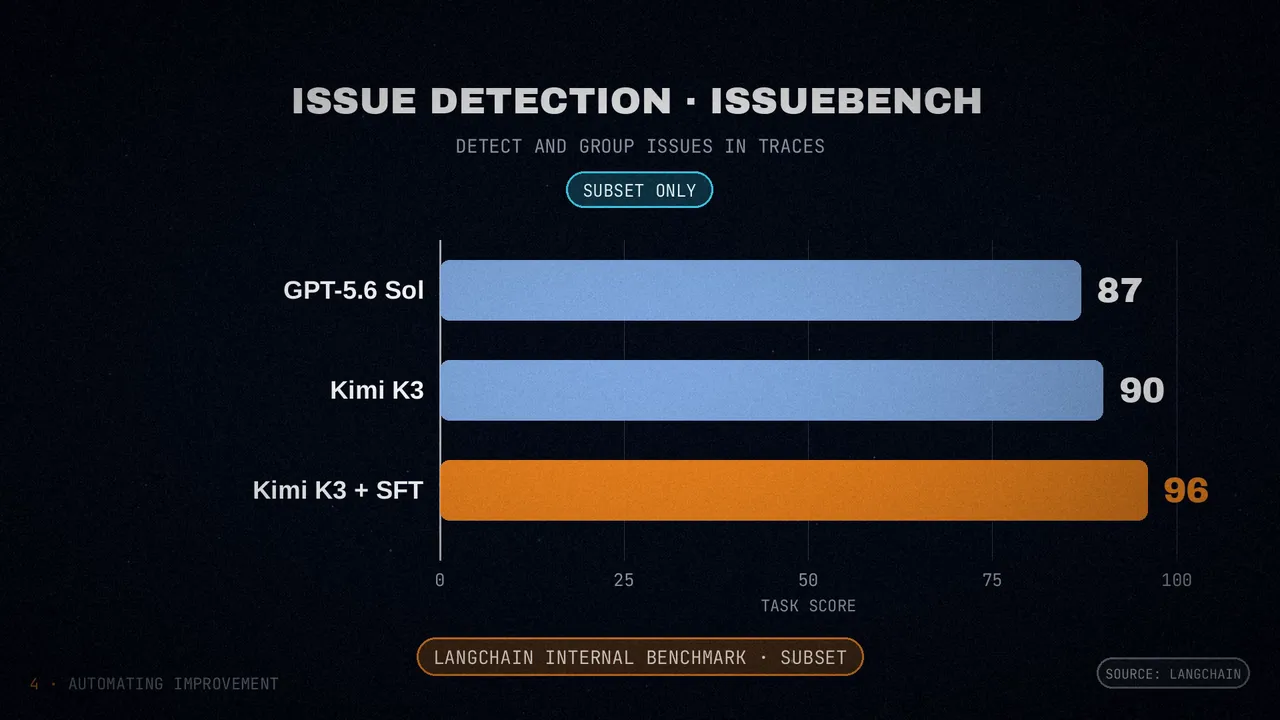
LangChain tried SmithTune on Engine itself, fine-tuning Kimi K3 on trajectories from one of its agents. On a subset of IssueBench, its internal benchmark for detecting and grouping issues in traces, the tuned model scored 96, against 90 for base Kimi K3 and 87 for GPT-5.6 Sol. It is a result on their benchmark and their task, not a general model comparison, but it illustrates the point: the data to specialize a model was already in their traces.
All three can be used together with online evaluators, and according to the article they work better that way: the evaluator scores help them filter and cluster issues faster and more accurately.
The lake keeps filling up
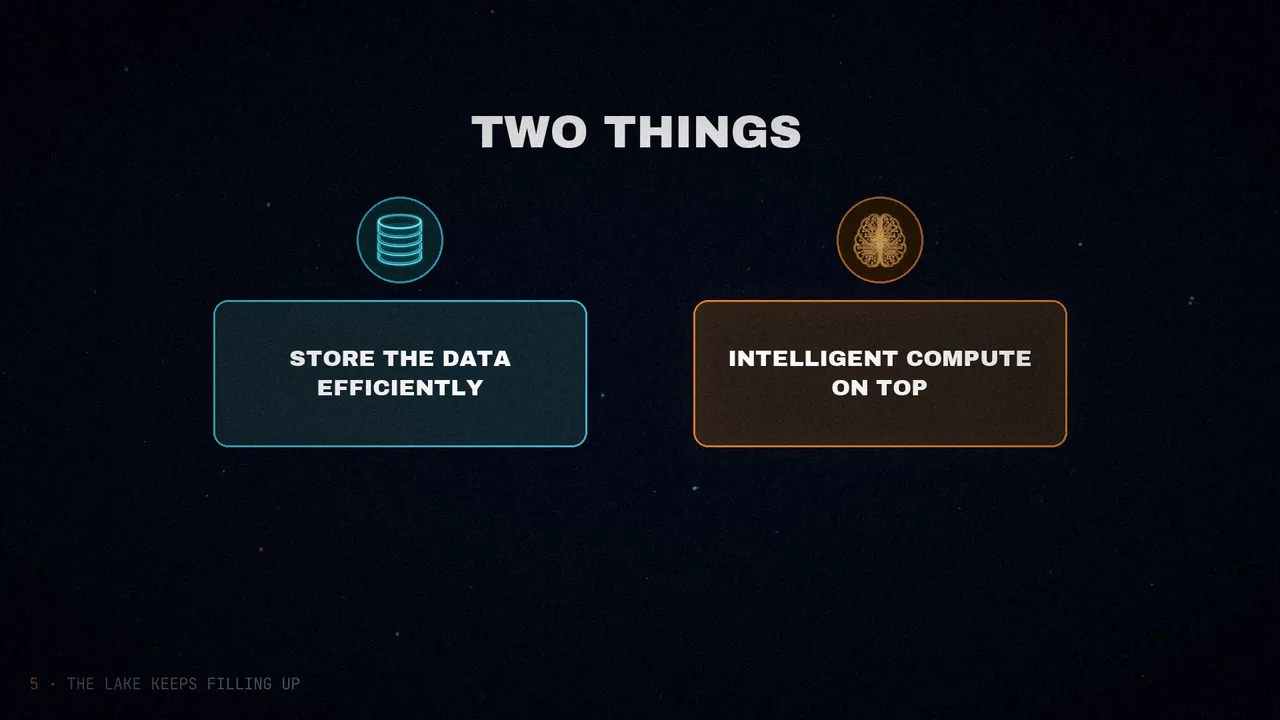
The more work agents do for a company, the more data they generate, and that data can be used to improve the agents themselves. LangChain calls it owning your intelligence. For that, the article says, you need a lake that does two things: store all that agent data efficiently and put intelligent compute on top to keep the improvement loop spinning.
In short
The agent lake is LangChain's way of describing where LangSmith is heading: traces and outcomes in one store, and agents (Insights, Engine, SmithTune) that analyze it to improve other agents, backed by online evaluators and semantic search. It is a product post, so the numbers and the comparison with Snowflake or Databricks come from the company itself; still, the core idea stands on its own: if your agents work in production, their traces and outcomes are the material to improve them with.
The value is not in each trace, but in everything you can do on top of them.
What would you do with your agents' traces?
Sources
- “The Agent Lake”, by Sam Crowder (LangChain blog, November 24, 2026).
- The video, on my channels: English and Spanish.