Disclaimer: This post has been translated to English using a machine translation model. Please, let me know if you find any mistakes.
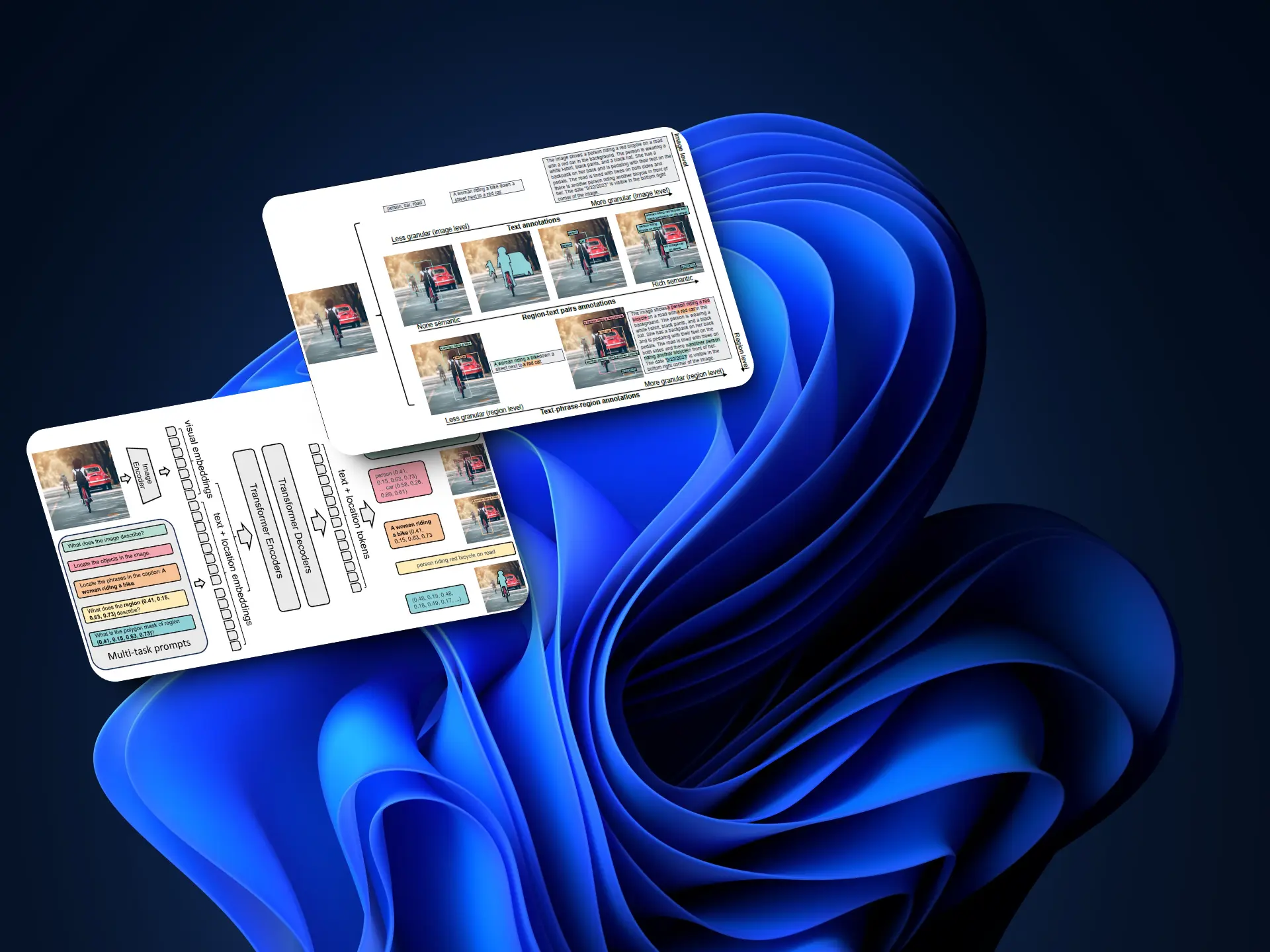
In the post Florence-2 we already explained the Florence-2 model and saw how to use it. So in this post, we are going to see how to fine-tune it.
Fine tuning for Document VQA
This fine-tuning is based on the post by Merve Noyan, Andres Marafioti and Piotr Skalski, Fine-tuning Florence-2 - Microsoft's Cutting-edge Vision Language Models, in which they explain that although this method is very comprehensive, it does not allow asking questions about documents, so they perform a retraining with the DocumentVQA dataset.
Dataset
First, we download the dataset. I'm leaving the dataset_percentage variable in case you don't want to download everything.
InputPythonfrom datasets import load_datasetdataset_percentage = 100data_train = load_dataset("HuggingFaceM4/DocumentVQA", split=f"train[:{dataset_percentage}%]")data_validation = load_dataset("HuggingFaceM4/DocumentVQA", split=f"validation[:{dataset_percentage}%]")data_test = load_dataset("HuggingFaceM4/DocumentVQA", split=f"test[:{dataset_percentage}%]")data_train, data_validation, data_testCopied
(Dataset({features: ['questionId', 'question', 'question_types', 'image', 'docId', 'ucsf_document_id', 'ucsf_document_page_no', 'answers'],num_rows: 39463}),Dataset({features: ['questionId', 'question', 'question_types', 'image', 'docId', 'ucsf_document_id', 'ucsf_document_page_no', 'answers'],num_rows: 5349}),Dataset({features: ['questionId', 'question', 'question_types', 'image', 'docId', 'ucsf_document_id', 'ucsf_document_page_no', 'answers'],num_rows: 5188}))
We make a subset of the dataset if you want to speed up the training, in my case I use 100% of the data
InputPythonpercentage = 1subset_data_train = data_train.select(range(int(len(data_train) * percentage)))subset_data_validation = data_validation.select(range(int(len(data_validation) * percentage)))subset_data_test = data_test.select(range(int(len(data_test) * percentage)))print(f"train dataset length: {len(subset_data_train)}, validation dataset length: {len(subset_data_validation)}, test dataset length: {len(subset_data_test)}")Copied
train dataset length: 39463, validation dataset length: 5349, test dataset length: 5188
We also instantiate the model
InputPythonfrom transformers import AutoModelForCausalLM, AutoProcessorimport torchdevice = torch.device("cuda" if torch.cuda.is_available() else "cpu")checkpoints = 'microsoft/Florence-2-base-ft'model = AutoModelForCausalLM.from_pretrained(checkpoints, trust_remote_code=True).to(device)processor = AutoProcessor.from_pretrained(checkpoints, trust_remote_code=True)Copied
Just like in the post Florence-2 we create a function to ask the model for responses
InputPythondef create_prompt(task_prompt, text_input=None):if text_input is None:prompt = task_promptelse:prompt = task_prompt + text_inputreturn promptCopied
InputPythondef generate_answer(task_prompt, text_input=None, image=None, device="cpu"):# Create promptprompt = create_prompt(task_prompt, text_input)# Ensure the image is in RGB modeif image.mode != "RGB":image = image.convert("RGB")# Get inputsinputs = processor(text=prompt, images=image, return_tensors="pt").to(device)# Get outputsgenerated_ids = model.generate(input_ids=inputs["input_ids"],pixel_values=inputs["pixel_values"],max_new_tokens=1024,early_stopping=False,do_sample=False,num_beams=3,)# Decode the generated IDsgenerated_text = processor.batch_decode(generated_ids, skip_special_tokens=False)[0]# Post-process the generated textparsed_answer = processor.post_process_generation(generated_text,task=task_prompt,image_size=(image.width, image.height))return parsed_answerCopied
We test the model with 3 documents from the dataset, with the task DocVQA to see if we get anything.
InputPythonfor idx in range(3):print(generate_answer(task_prompt="<DocVQA>", text_input='What do you see in this image?', image=data_train[idx]['image'], device=model.device))display(data_train[idx]['image'].resize([350, 350]))Copied
{'<DocVQA>': 'docvQA'}
<PIL.Image.Image image mode=L size=350x350>
{'<DocVQA>': 'docvQA'}
<PIL.Image.Image image mode=L size=350x350>
{'<DocVQA>': 'DocVQA>'}
<PIL.Image.Image image mode=L size=350x350>
InputPythonfor idx in range(3):print(generate_answer(task_prompt="DocVQA", text_input='What do you see in this image?', image=data_train[idx]['image'], device=model.device))display(data_train[idx]['image'].resize([350, 350]))Copied
{'DocVQA': 'unanswerable'}
<PIL.Image.Image image mode=L size=350x350>
{'DocVQA': 'unanswerable'}
<PIL.Image.Image image mode=L size=350x350>
{'DocVQA': '499150498'}
<PIL.Image.Image image mode=L size=350x350>
We see that the answers are not good.
We are now testing with the OCR task
InputPythonfor idx in range(3):print(generate_answer(task_prompt="<OCR>", image=data_train[idx]['image'], device=model.device))display(data_train[idx]['image'].resize([350, 350]))Copied
{'<OCR>': 'ConfidentialDATE:11/8/18RJT FR APPROVALBUBJECT: Rl gdasPROPOSED RELEASE DATE:for responseFOR RELEASE TO!CONTRACT: P. CARTERROUTE TO!NameIntiifnPeggy CarterAce11/fesMura PayneDavid Fishhel037Tom Gisis Com-Diane BarrowsEd BlackmerTow KuckerReturn to Peggy Carter, PR, 16 Raynolds BuildingLLS. 2015Source: https://www.industrydocuments.ucsf.edu/docs/xnbl0037'}
<PIL.Image.Image image mode=L size=350x350>
{'<OCR>': 'ConfidentialDATE:11/8/18RJT FR APPROVALBUBJECT: Rl gdasPROPOSED RELEASE DATE:for responseFOR RELEASE TO!CONTRACT: P. CARTERROUTE TO!NameIntiifnPeggy CarterAce11/fesMura PayneDavid Fishhel037Tom Gisis Com-Diane BarrowsEd BlackmerTow KuckerReturn to Peggy Carter, PR, 16 Raynolds BuildingLLS. 2015Source: https://www.industrydocuments.ucsf.edu/docs/xnbl0037'}
<PIL.Image.Image image mode=L size=350x350>
{'<OCR>': 'BSABROWN & WILLIAMSON JOBACCO CORPORATIONRESEARCH & DEVELOPMENTINTERNAL CORRESPONDENCETO:R. H. HoneycuttCC:C.J. CookFROM:May 9, 1995SUBJECT: Review of Existing Brainstorming Ideas/43The major function of the Product Innovation Ideas is developed marketable novel productsthat would be profile of the manufacturer and sell. Novel is defined as: a new kind, or differentfrom anything seen in known before, Innovation things as something is available. The products mayintroduced and the most technologies, materials and know, available to give a uniquetaste or tok.The first task of the product innovation was was an easy-view review and then a list ofexisting brainstorming ideas. These were group was used for two major categories that may differapparance and lerato,Ideas are grouped into two major products that may offercategories include a combination print of the above, flowers, and packaged and brand directions.ApparanceThis category is used in a novel cigarette constructions that yield visually different products withminimal changes in smokecigarette.Two cigarettes in one.Multi-plug in your.C-Switch menthol or non non smoking cigarette.E-Switch with ORPORated perforations to enable smoke to separate unburned section forfuture smoking.Tout smoking.Bobace section 30 mm.Novelcigarette constructions and permit a significant reduction in tobacco weight whilemaintaining fast smoking mechanics and visual reduction for tobacco weight.higher basis weight paper, potential reduction for cigarette weight.Easter or in an ebony agent for tobacco, e.g. starch.Colored tow and cigarette papers; seasonal promotions, eg. pastel colored cigarettes forEaster and in an Ebony brand containing a mixture of all black (black paper and tow)and all white cigarettes.499150498Source: https://www.industrydocuments.ucs.edu/docs/mxj0037'}
<PIL.Image.Image image mode=L size=350x350>
We obtain the text from the documents, but not what the documents are about.
Lastly, we test with the CAPTION tasks
InputPythonfor idx in range(3):print(generate_answer(task_prompt="<CAPTION>", image=data_train[idx]['image'], device=model.device))print(generate_answer(task_prompt="<DETAILED_CAPTION>", image=data_train[idx]['image'], device=model.device))print(generate_answer(task_prompt="<MORE_DETAILED_CAPTION>", image=data_train[idx]['image'], device=model.device))display(data_train[idx]['image'].resize([350, 350]))Copied
{'<CAPTION>': 'A certificate is stamped with the date of 18/18.'}{'<DETAILED_CAPTION>': 'In this image we can see a paper with some text on it.'}{'<MORE_DETAILED_CAPTION>': 'A letter is written in black ink on a white paper. The letters are written in a cursive language. The letter is addressed to peggy carter. '}
<PIL.Image.Image image mode=L size=350x350>
{'<CAPTION>': 'A certificate is stamped with the date of 18/18.'}{'<DETAILED_CAPTION>': 'In this image we can see a paper with some text on it.'}{'<MORE_DETAILED_CAPTION>': 'A letter is written in black ink on a white paper. The letters are written in a cursive language. The letter is addressed to peggy carter. '}
<PIL.Image.Image image mode=L size=350x350>
{'<CAPTION>': "a paper that says 'brown & williamson tobacco corporation research & development' on it"}{'<DETAILED_CAPTION>': 'In this image we can see a paper with some text on it.'}{'<MORE_DETAILED_CAPTION>': 'The image is a page from a book titled "Brown & Williamson Jobacco Corporation Research & Development". The page is white and has black text. The title of the page is "R. H. Honeycutt" at the top. There is a logo of the company BSA in the top right corner. A paragraph is written in black text below the title.'}
<PIL.Image.Image image mode=L size=350x350>
Let's not accept these responses either, so we are going to do some fine-tuning.
Fine tuning
First we create a Pytorch dataset
InputPythonfrom torch.utils.data import Datasetclass DocVQADataset(Dataset):def __init__(self, data):self.data = datadef __len__(self):return len(self.data)def __getitem__(self, idx):example = self.data[idx]question = "<DocVQA>" + example['question']first_answer = example['answers'][0]image = example['image']if image.mode != "RGB":image = image.convert("RGB")return question, first_answer, imageCopied
InputPythontrain_dataset = DocVQADataset(subset_data_train)val_dataset = DocVQADataset(subset_data_validation)Copied
Let's see it
InputPythontrain_dataset[0]Copied
('<DocVQA>what is the date mentioned in this letter?','1/8/93',<PIL.Image.Image image mode=RGB size=1695x2025>)
InputPythondata_train[0]Copied
{'questionId': 337,'question': 'what is the date mentioned in this letter?','question_types': ['handwritten', 'form'],'image': <PIL.PngImagePlugin.PngImageFile image mode=L size=1695x2025>,'docId': 279,'ucsf_document_id': 'xnbl0037','ucsf_document_page_no': '1','answers': ['1/8/93']}
We create a DataLoader
InputPythonimport osfrom torch.utils.data import DataLoaderfrom tqdm import tqdmfrom transformers import (AdamW, AutoProcessor, get_scheduler)def collate_fn(batch):questions, answers, images = zip(*batch)inputs = processor(text=list(questions), images=list(images), return_tensors="pt", padding=True).to(device)return inputs, answers# Create DataLoaderbatch_size = 8num_workers = 0train_loader = DataLoader(train_dataset, batch_size=batch_size, collate_fn=collate_fn, num_workers=num_workers, shuffle=True)val_loader = DataLoader(val_dataset, batch_size=batch_size, collate_fn=collate_fn, num_workers=num_workers)Copied
Let's see a sample
InputPythonsample = next(iter(train_loader))Copied
InputPythonsampleCopied
({'input_ids': tensor([[ 0, 41552, 42291, 846, 1864, 250, 15698, 12375, 16, 5,3383, 9, 331, 9, 2042, 116, 2, 1, 1, 1,1, 1, 1],[ 0, 41552, 42291, 846, 1864, 250, 15698, 2264, 16, 5,11968, 196, 205, 22922, 346, 17487, 2, 1, 1, 1,1, 1, 1],[ 0, 41552, 42291, 846, 1864, 250, 15698, 2264, 16, 5,1229, 13, 403, 690, 116, 2, 1, 1, 1, 1,1, 1, 1],[ 0, 41552, 42291, 846, 1864, 250, 15698, 2264, 16, 5,5480, 1280, 116, 2, 1, 1, 1, 1, 1, 1,1, 1, 1],[ 0, 41552, 42291, 846, 1864, 250, 15698, 12196, 16, 5,1842, 346, 13, 20, 4680, 41828, 42237, 8, 30147, 17487,2, 1, 1],[ 0, 41552, 42291, 846, 1864, 250, 15698, 560, 61, 675,473, 42, 1013, 266, 9943, 7, 116, 2, 1, 1,1, 1, 1],[ 0, 41552, 42291, 846, 1864, 250, 15698, 12196, 16, 5,1280, 9, 39432, 642, 6228, 2394, 2801, 11, 5, 576,266, 17487, 2],[ 0, 41552, 42291, 846, 1864, 250, 15698, 2264, 16, 1982,11, 5, 6655, 2325, 23, 5, 299, 235, 9, 5,3780, 116, 2]]), 'attention_mask': tensor([[1, 1, 1, 1, 1, 1, 1, 1, 1, 1, 1, 1, 1, 1, 1, 1, 1, 0, 0, 0, 0, 0, 0],[1, 1, 1, 1, 1, 1, 1, 1, 1, 1, 1, 1, 1, 1, 1, 1, 1, 0, 0, 0, 0, 0, 0],...'97.00','123','1 January 1979 - 31 December 1979','$2,720.14','GPI'))
The raw sample is a lot of information, so let's check the length of the sample
InputPythonlen(sample)Copied
2
We get a length of 2 because we have the input to the model and the response
InputPythonsample_inputs = sample[0]sample_answers = sample[1]Copied
We see the input
InputPythonsample_inputsCopied
{'input_ids': tensor([[ 0, 41552, 42291, 846, 1864, 250, 15698, 12375, 16, 5,3383, 9, 331, 9, 2042, 116, 2, 1, 1, 1,1, 1, 1],[ 0, 41552, 42291, 846, 1864, 250, 15698, 2264, 16, 5,11968, 196, 205, 22922, 346, 17487, 2, 1, 1, 1,1, 1, 1],[ 0, 41552, 42291, 846, 1864, 250, 15698, 2264, 16, 5,1229, 13, 403, 690, 116, 2, 1, 1, 1, 1,1, 1, 1],[ 0, 41552, 42291, 846, 1864, 250, 15698, 2264, 16, 5,5480, 1280, 116, 2, 1, 1, 1, 1, 1, 1,1, 1, 1],[ 0, 41552, 42291, 846, 1864, 250, 15698, 12196, 16, 5,1842, 346, 13, 20, 4680, 41828, 42237, 8, 30147, 17487,2, 1, 1],[ 0, 41552, 42291, 846, 1864, 250, 15698, 560, 61, 675,473, 42, 1013, 266, 9943, 7, 116, 2, 1, 1,1, 1, 1],[ 0, 41552, 42291, 846, 1864, 250, 15698, 12196, 16, 5,1280, 9, 39432, 642, 6228, 2394, 2801, 11, 5, 576,266, 17487, 2],[ 0, 41552, 42291, 846, 1864, 250, 15698, 2264, 16, 1982,11, 5, 6655, 2325, 23, 5, 299, 235, 9, 5,3780, 116, 2]]), 'attention_mask': tensor([[1, 1, 1, 1, 1, 1, 1, 1, 1, 1, 1, 1, 1, 1, 1, 1, 1, 0, 0, 0, 0, 0, 0],[1, 1, 1, 1, 1, 1, 1, 1, 1, 1, 1, 1, 1, 1, 1, 1, 1, 0, 0, 0, 0, 0, 0],...[ 2.6400, 2.6400, 2.6400, ..., 1.3502, 0.7925, 1.3502],[ 2.6400, 2.6400, 2.6400, ..., 0.9319, 1.4025, 0.8448],[ 2.6400, 2.6400, 2.6400, ..., 1.0365, 1.2282, 0.8099]]]])}
The raw input also has too much information, so let's look at the keys
InputPythonsample_inputs.keys()Copied
dict_keys(['input_ids', 'attention_mask', 'pixel_values'])
As we can see, we have the input_ids and the attention_mask which correspond to the input text, and the pixel_values which correspond to the image. Let's check the dimension of each one.
InputPythonsample_inputs['input_ids'].shape, sample_inputs['attention_mask'].shape, sample_inputs['pixel_values'].shapeCopied
(torch.Size([8, 23]), torch.Size([8, 23]), torch.Size([8, 3, 768, 768]))
In all of them there are 8 elements, because when creating the dataloader we set a batch size of 8. In the input_ids and attention_mask, each element has 28 tokens, and in the pixel_values, each element has 3 channels, 768 pixels in height, and 768 pixels in width.
Let's now look at the answers
InputPythonsample_answersCopied
('JAMES A. RHODES','1-800-992-3284','$50,000','97.00','123','1 January 1979 - 31 December 1979','$2,720.14','GPI')
We obtained 8 responses, for the same reason as before, because when creating the dataloader we set a batch size of 8
InputPythonlen(sample_answers)Copied
8
We create a function to perform the fine tuning
InputPythondef train_model(train_loader, val_loader, model, processor, epochs=10, lr=1e-6):optimizer = AdamW(model.parameters(), lr=lr)num_training_steps = epochs * len(train_loader)lr_scheduler = get_scheduler(name="linear",optimizer=optimizer,num_warmup_steps=0,num_training_steps=num_training_steps,)for epoch in range(epochs):# Training phaseprint(f" Training Epoch {epoch + 1}/{epochs}")model.train()train_loss = 0i = -1for batch in tqdm(train_loader, desc=f"Training Epoch {epoch + 1}/{epochs}"):i += 1inputs, answers = batchinput_ids = inputs["input_ids"]pixel_values = inputs["pixel_values"]labels = processor.tokenizer(text=answers, return_tensors="pt", padding=True, return_token_type_ids=False).input_ids.to(device)outputs = model(input_ids=input_ids, pixel_values=pixel_values, labels=labels)loss = outputs.lossloss.backward()optimizer.step()lr_scheduler.step()optimizer.zero_grad()train_loss += loss.item()avg_train_loss = train_loss / len(train_loader)print(f"Average Training Loss: {avg_train_loss}")# Validation phasemodel.eval()val_loss = 0with torch.no_grad():for batch in tqdm(val_loader, desc=f"Validation Epoch {epoch + 1}/{epochs}"):inputs, answers = batchinput_ids = inputs["input_ids"]pixel_values = inputs["pixel_values"]labels = processor.tokenizer(text=answers, return_tensors="pt", padding=True, return_token_type_ids=False).input_ids.to(device)outputs = model(input_ids=input_ids, pixel_values=pixel_values, labels=labels)loss = outputs.lossval_loss += loss.item()avg_val_loss = val_loss / len(val_loader)print(f"Average Validation Loss: {avg_val_loss}")Copied
We train
InputPythontrain_model(train_loader, val_loader, model, processor, epochs=3, lr=1e-6)Copied
Training Epoch 1/3
Training Epoch 1/3: 100%|██████████| 4933/4933 [2:45:28<00:00, 2.01s/it]
Average Training Loss: 1.153514638062836
Validation Epoch 1/3: 100%|██████████| 669/669 [13:52<00:00, 1.24s/it]
Average Validation Loss: 0.7698153616646124Training Epoch 2/3
Training Epoch 2/3: 100%|██████████| 4933/4933 [2:42:51<00:00, 1.98s/it]
Average Training Loss: 0.6530420315007687
Validation Epoch 2/3: 100%|██████████| 669/669 [13:48<00:00, 1.24s/it]
Average Validation Loss: 0.725301219375946Training Epoch 3/3
Training Epoch 3/3: 100%|██████████| 4933/4933 [2:42:52<00:00, 1.98s/it]
Average Training Loss: 0.5878197003753292
Validation Epoch 3/3: 100%|██████████| 669/669 [13:45<00:00, 1.23s/it]
Average Validation Loss: 0.716769086751079
Test the fine-tuned model
We now test the model on a few documents from the test set
InputPythonfor idx in range(3):print(generate_answer(task_prompt="<DocVQA>", text_input='What do you see in this image?', image=data_test[idx]['image'], device=model.device))display(data_test[idx]['image'].resize([350, 350]))Copied
{'<DocVQA>': 'CAGR 19%'}
<PIL.Image.Image image mode=L size=350x350>
{'<DocVQA>': 'memorandum'}
<PIL.Image.Image image mode=L size=350x350>
{'<DocVQA>': '14000'}
<PIL.Image.Image image mode=L size=350x350>
We see that it gives us information
Let's now retest on the test set to compare with what came out before training
InputPythonfor idx in range(3):print(generate_answer(task_prompt="<DocVQA>", text_input='What do you see in this image?', image=data_train[idx]['image'], device=model.device))display(data_train[idx]['image'].resize([350, 350]))Copied
{'<DocVQA>': 'Confidential'}
<PIL.Image.Image image mode=L size=350x350>
{'<DocVQA>': 'Confidential'}
<PIL.Image.Image image mode=L size=350x350>
{'<DocVQA>': 'Brown & Williamson Tobacco Corporation Research & Development'}
<PIL.Image.Image image mode=L size=350x350>
It doesn't yield very good results, but we have only trained for 3 epochs. Although it could be improved by training more, what can be seen is that when we previously used the task tag <DocVQA>, we didn't get a response, but now we do.