Obsessives move the world
The manifesto opens with a claim: obsessives have always pushed the world forward. We owe them, it says, our most beloved products, our proudest scientific achievements, the art that moves us most, and the greatest leaps in what we're capable of.
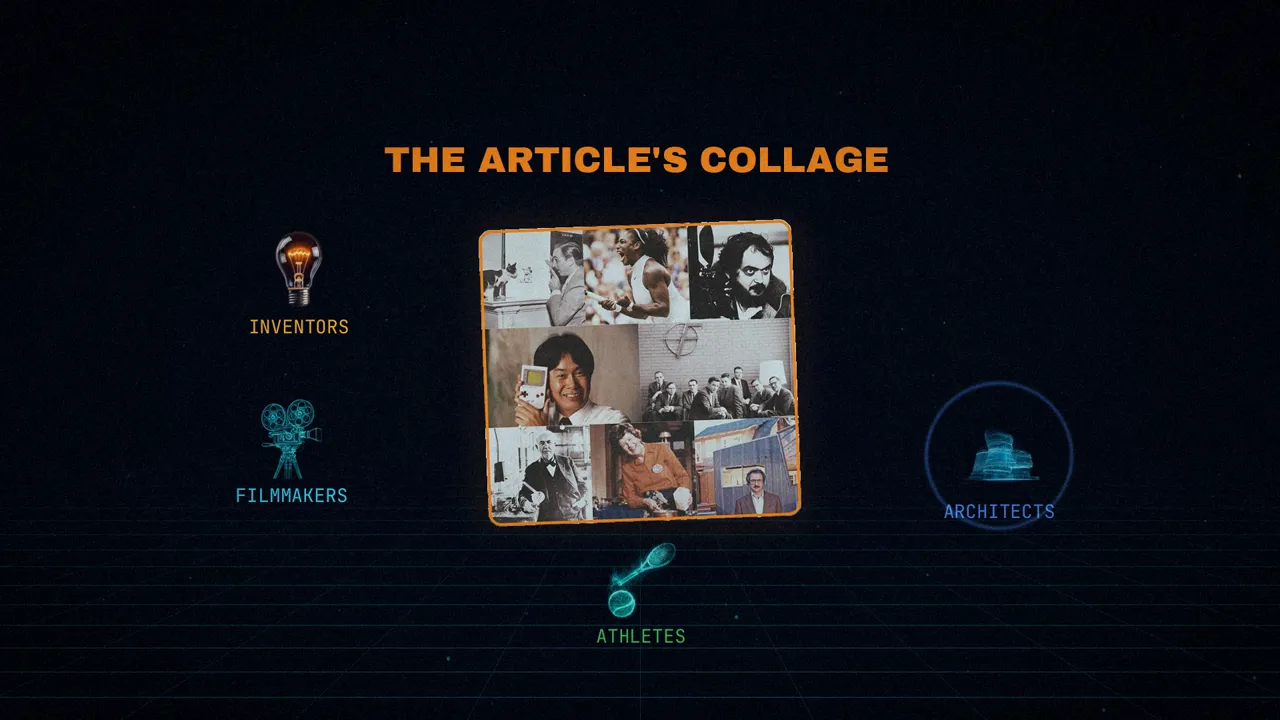
To make the point, the article puts together a black-and-white collage of inventors, filmmakers, athletes, architects and chefs: people known for being obsessed with their craft.
The "only a few companies" story
The next great leap, according to Srivastava, is artificial intelligence. And here comes the story we've all heard: only a few companies have what it takes to build it, and those few can make any field their own, whether it's medicine, education, law or programming. A handful of general models that do everything.
Note the nuance: the article doesn't say those companies can't do it. It says "the world will tell you" so, and that he sees it differently.
The other view: obsessed teams
Srivastava imagines a future where the most useful intelligence is shaped by obsessives. And who are they? According to the manifesto, teams that:
- Stay really, really close to their customers.
- Build specialized models that encode their expertise down to the tiniest detail.
- Respond to signals others never get to see: a complaint that keeps coming back, a rare case, a small gesture from a user (the examples are mine; the article doesn't spell them out).
- Don't settle for general: they push further to deliver something exceptional.
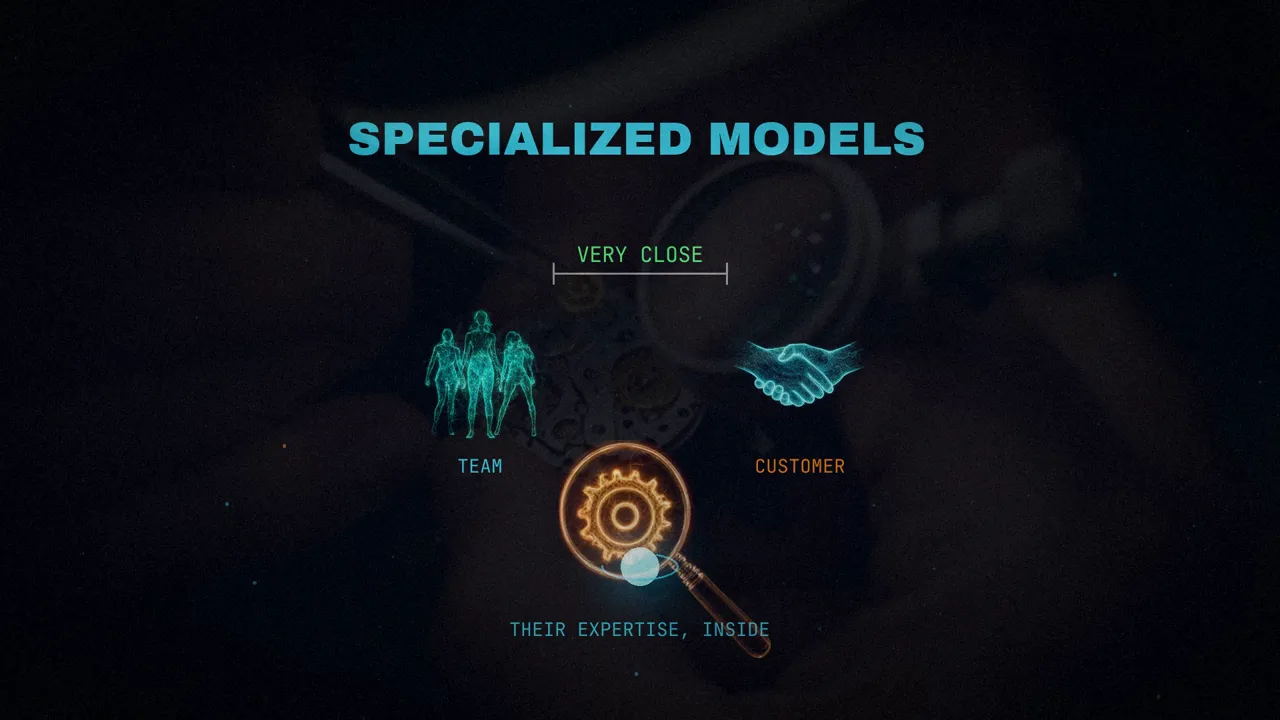
Then comes an important line: "We work with these people every day." And the manifesto introduces six teams.
The six teams
The article describes each team in one sentence and puts its name in a photo caption. For each one I add what the company does, so the example makes sense.
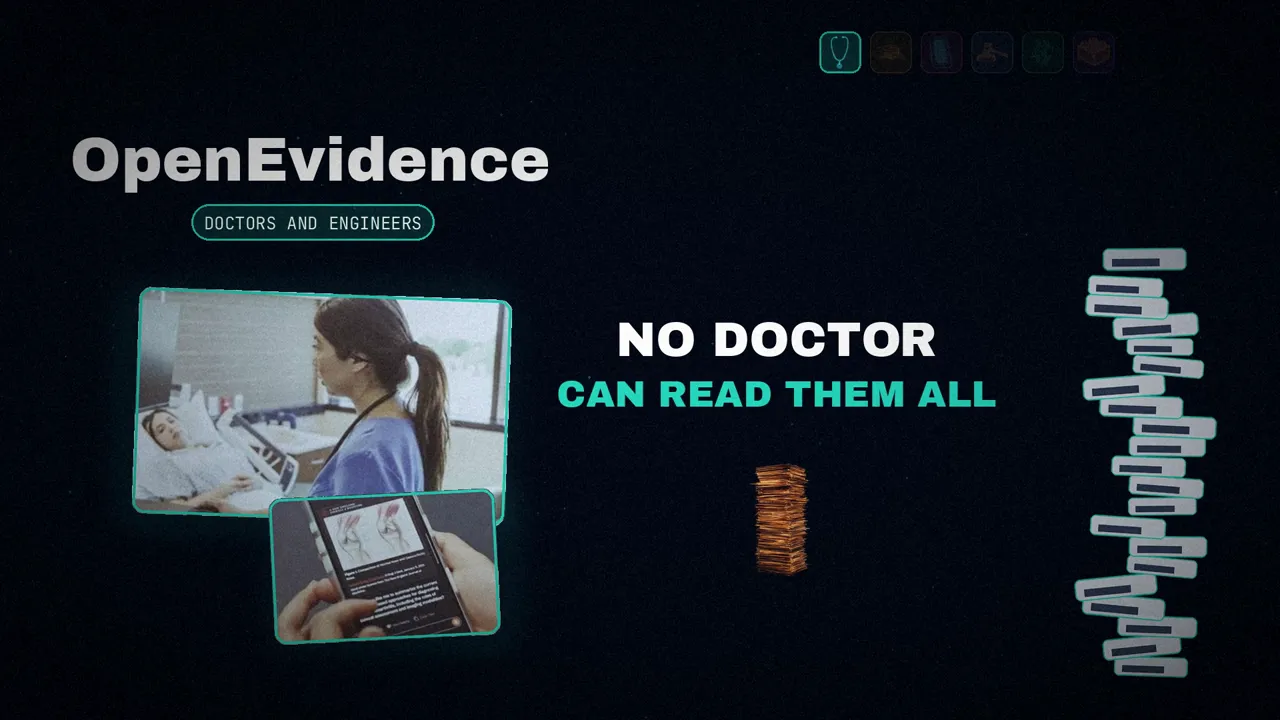
- OpenEvidence · doctors and engineers bringing the latest research to every bedside decision. It's a tool that doctors ask clinical questions, and that answers by drawing on the medical literature. So many studies come out that no doctor can read them all.
- SchoolAI · teachers making sure every student learns the way they need to. It's a platform where teachers set up AI-powered activities for their class and follow how each student is doing, so the whole class doesn't have to move at the same pace.
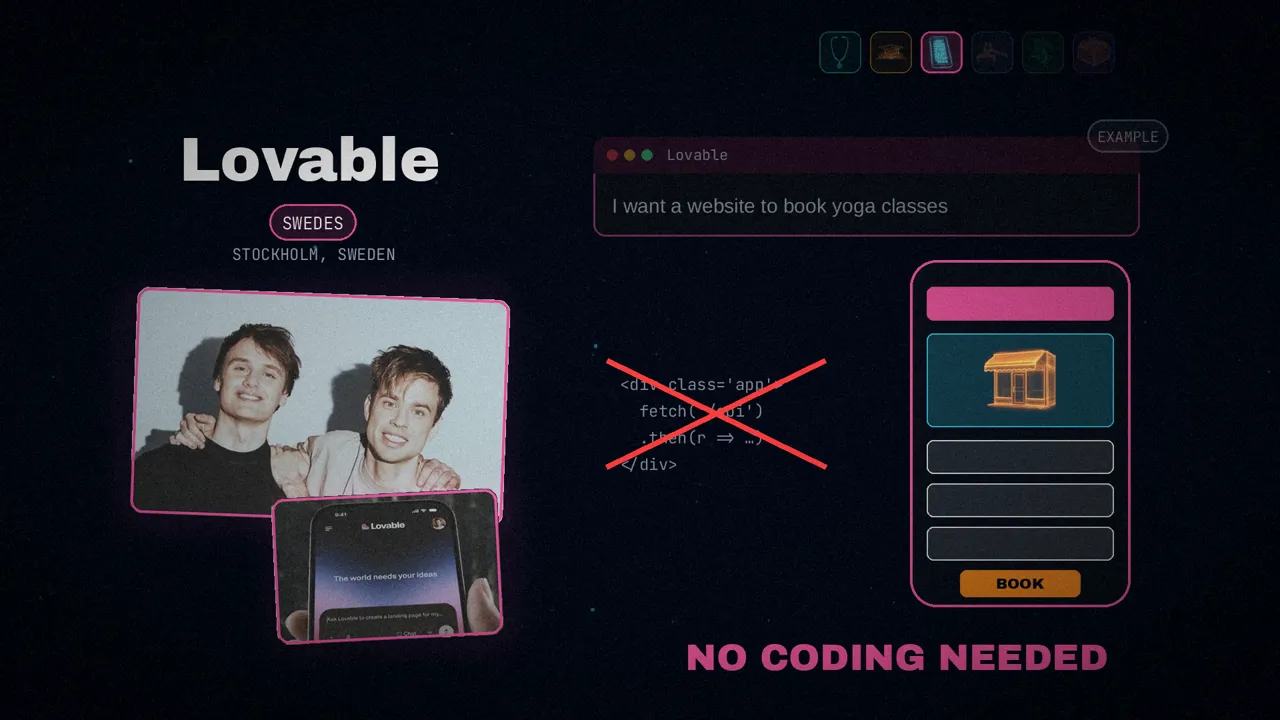
- Lovable · the Swedes helping anyone build the company of their dreams. It's from Stockholm: you describe the app you want in plain words, and it builds it for you, without you having to know how to code.
- Harvey · the litigator and researcher duo teaching machines to think like lawyers. One founder came from arguing cases in court, the other from AI research. Together they make an assistant for law firms that drafts documents, reviews contracts and analyzes case law.
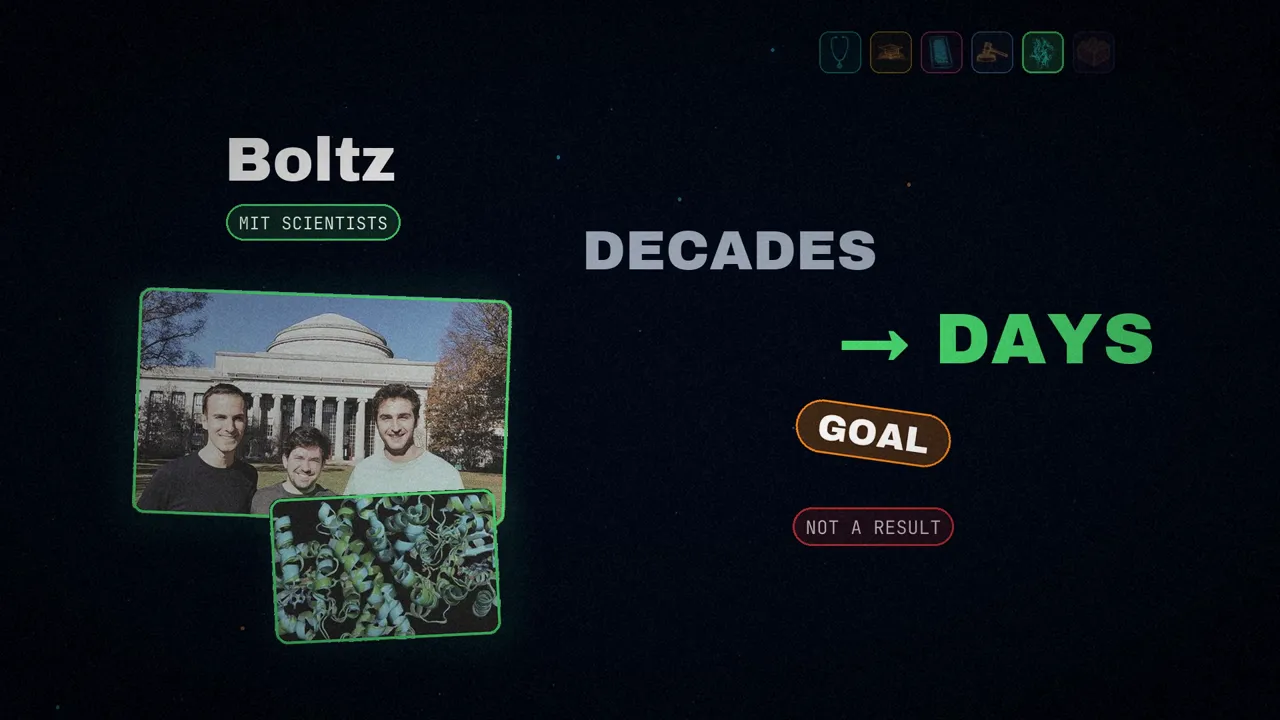
- Boltz · MIT scientists who won't stop until drug discovery takes days, not decades. They release open models that can predict the shape of proteins and how a molecule binds to them. Careful, though: the days are their goal, not a result. Today, developing a medicine still takes years.
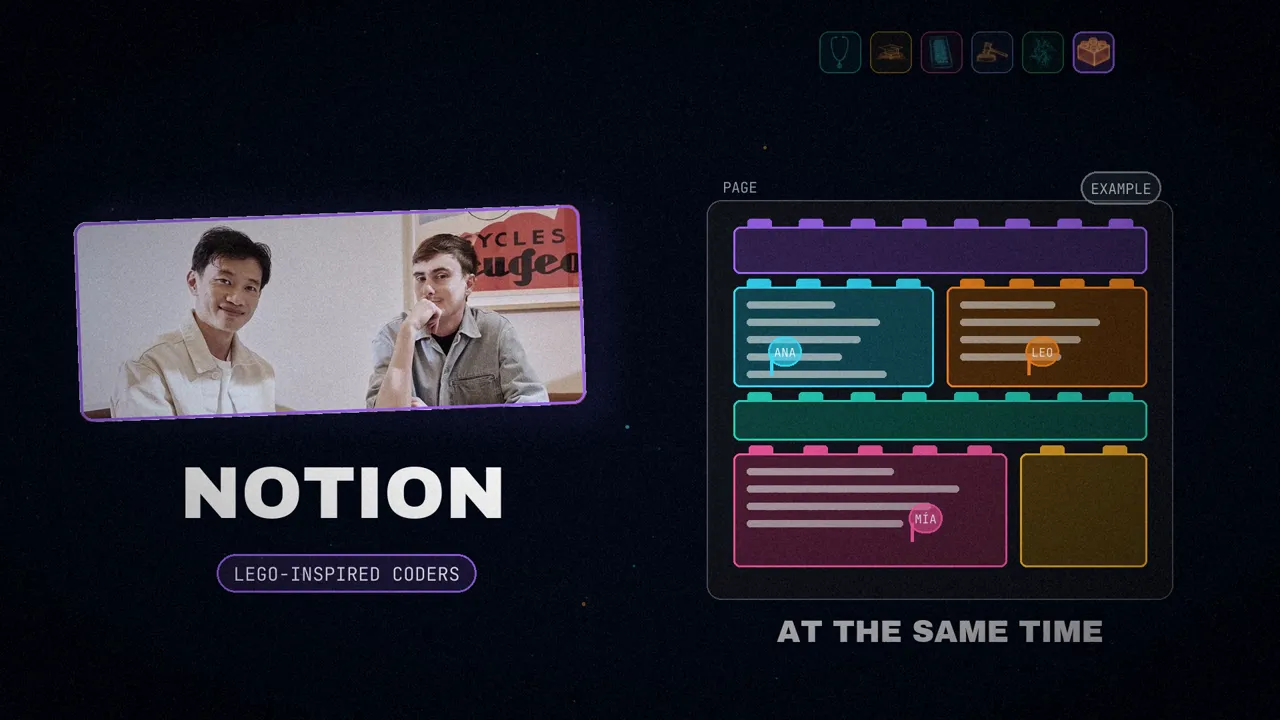
- Notion · Lego-inspired coders who believe the future of work is collaborative. Its pages are built from blocks that snap together, like Lego bricks, and entire teams write in them at the same time.
What they have in common
None of these six teams tries to do everything. Each one is obsessed with a craft: medicine, school, new companies, law, drugs or teamwork. And each knows that craft better than anyone looking at it from the outside.
That leads to the manifesto's first conclusion: intelligence should be defined by the teams closest to the work.
Intelligence owned by all of us
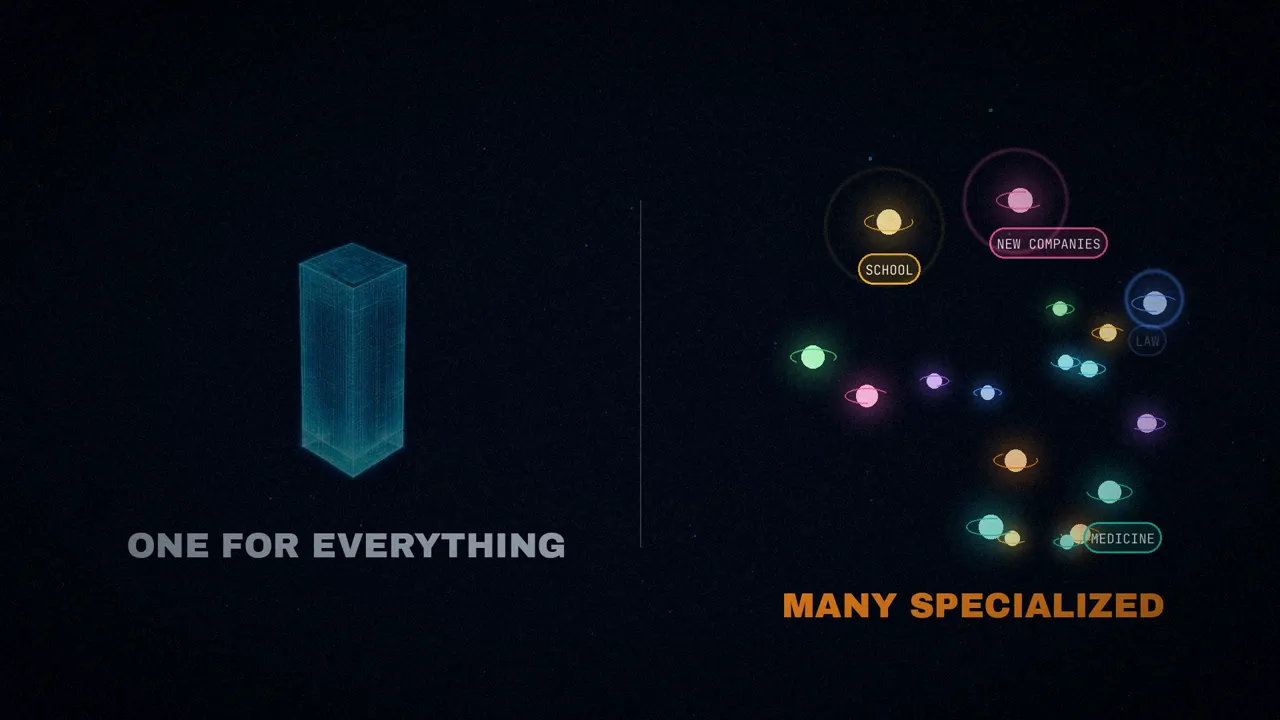
And it adds a second one: intelligence should be owned by all of us, not by a few companies. That's the "many model future": instead of one model that serves everything, many specialized ones, each built by whoever knows the problem best. The text ends with an invitation: "Let's build a many model future."
It's worth not reading too much into it: the manifesto offers no evidence that specialized models beat general ones, nor does it say each of these companies trains its own model from scratch. It's a vision, not a study.
Who's saying it
Keep in mind who signs the text. Baseten makes its living running other companies' models, so a future with many models is also its business. That doesn't invalidate the idea, but it helps to read it: it's the bet of a company that wins if it comes true.
In short
Tuhin Srivastava argues that the most useful artificial intelligence won't come from a few giants, but from teams obsessed with their craft, very close to their customers and with specialized models. He illustrates it with six teams (OpenEvidence, SchoolAI, Lovable, Harvey, Boltz and Notion) and closes with two ideas: intelligence should be defined by the people closest to the work, and it should be owned by all of us.
Instead of a few models that do everything, many specialized models built by whoever knows each craft best.
Do you think a few giant models will win, or many specialized ones?
Sources
- "A many model future", by Tuhin Srivastava (article on X, May 13, 2026).
- The video, on my channels: English and Spanish.