The thesis: sell the work, not the tool
Every founder building an AI tool is asking the same question: what happens when the next version of Claude turns my product into a feature? According to Bek, they're right to worry. If you sell the tool, you're in a race against the model.
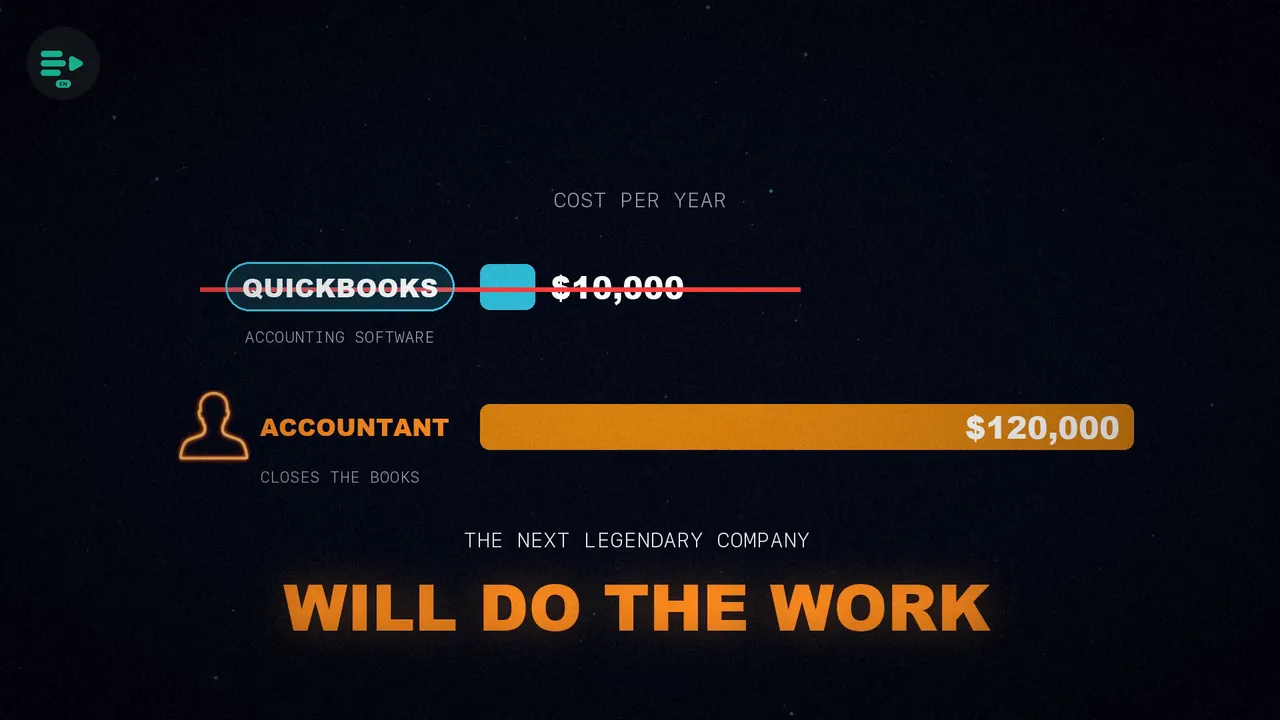
But if you sell the work, the race flips: every improvement in the model makes your service faster, cheaper and harder to compete with. The article's example makes it obvious. A company might spend $10K a year on QuickBooks and $120K on an accountant to close the books. The next legendary company won't sell the software. It will just close the books.
Intelligence versus judgement
To work out which work AI can already do, Bek separates two things:
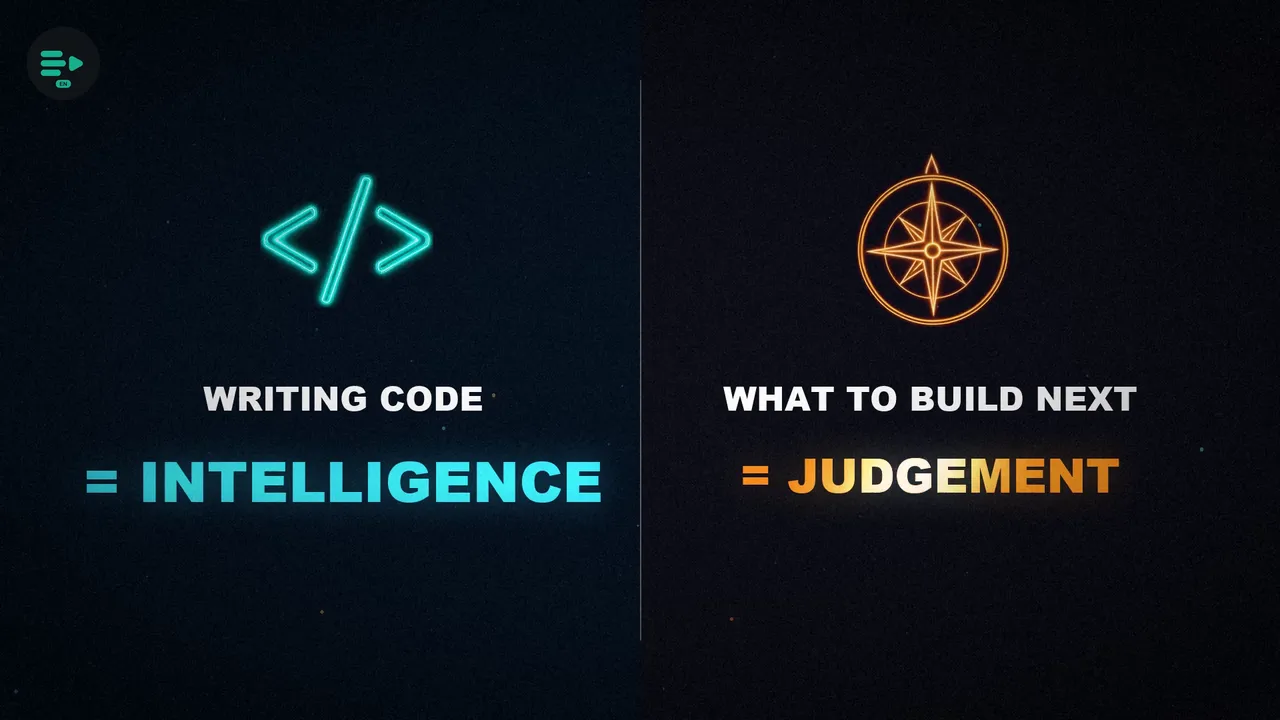
- Intelligence: work that follows rules, even complex ones. Turning a spec into code, testing and debugging are rules.
- Judgement: what takes experience, taste and instinct built over years of practice. Deciding which feature to build next, whether to take on tech debt, or when to ship before it's ready.
Software engineering is mostly intelligence work, and that's why it got there first. A year ago, most Cursor users treated AI as autocomplete; today, more tasks are started by agents than by humans. The article says software engineering accounts for "over half" of AI tool usage; its own chart shows 49.7% of agent tool calls, with no other category reaching 10%.
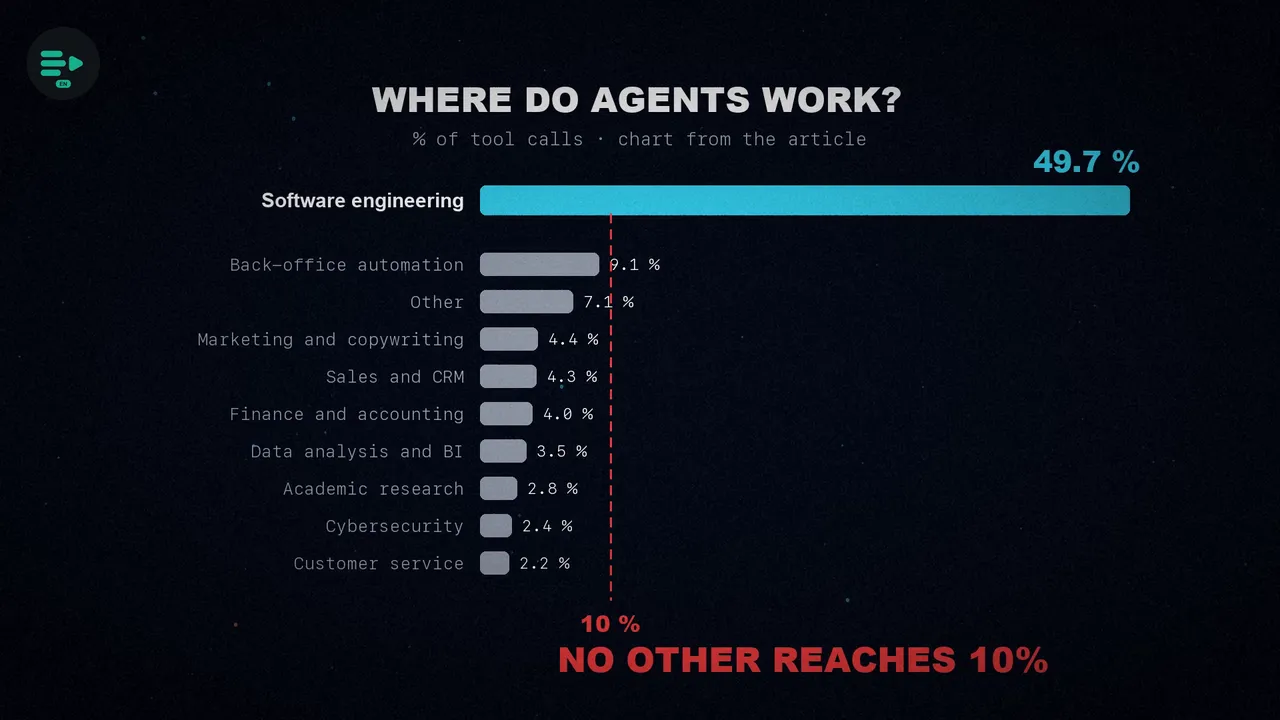
Bek's conclusion: AI has crossed the threshold where it can do most of the intelligence work on its own and leave the judgement to people. Software engineering got there first, but it's coming to every profession.
Copilots and autopilots
That leads to the article's core distinction: a copilot sells the tool; an autopilot sells the work.
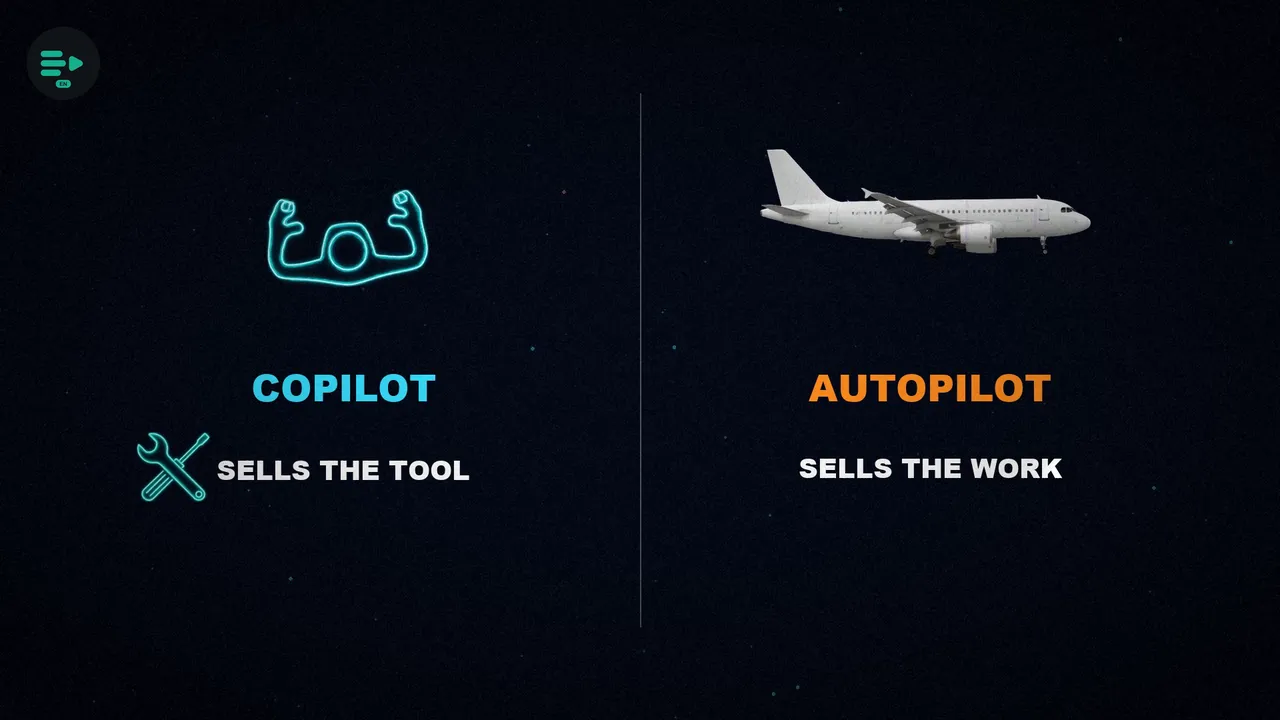
Puts AI in the hands of a professional, who decides what to do with it and owns the output. Harvey sells to law firms; Rogo, to investment banks. It was the right move while models were still developing intelligence and judgement.
Sells the outcome directly to whoever needs it. Crosby sells the NDA to the company, not to its outside counsel; WithCoverage sells insurance to the CFO, not to the broker.
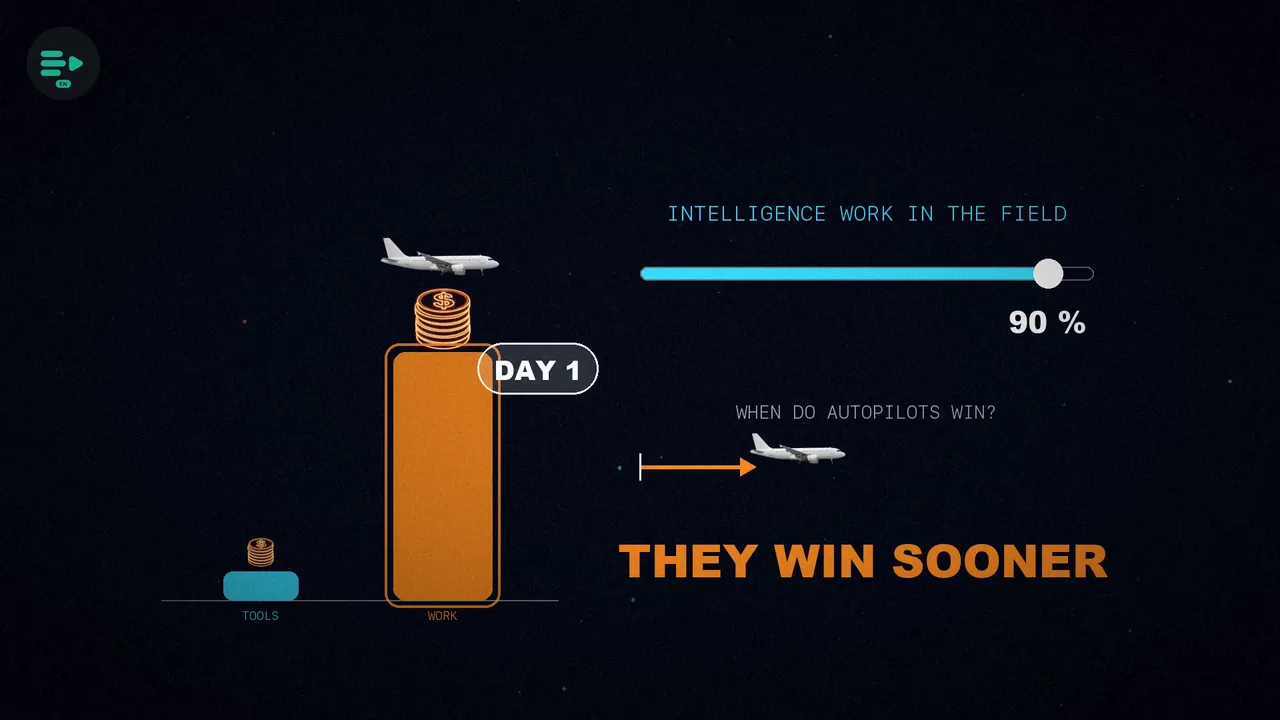
The key is the money: in any profession, the work budget dwarfs the tool budget, and autopilots capture it from day one. The higher the intelligence ratio in a field, the sooner autopilots will win.
Convergence
Today's judgement will become tomorrow's intelligence. As these systems gather proprietary data about what good judgement looks like in their field, the frontier moves. Copilots and autopilots will converge, and in several categories that shift has already begun.
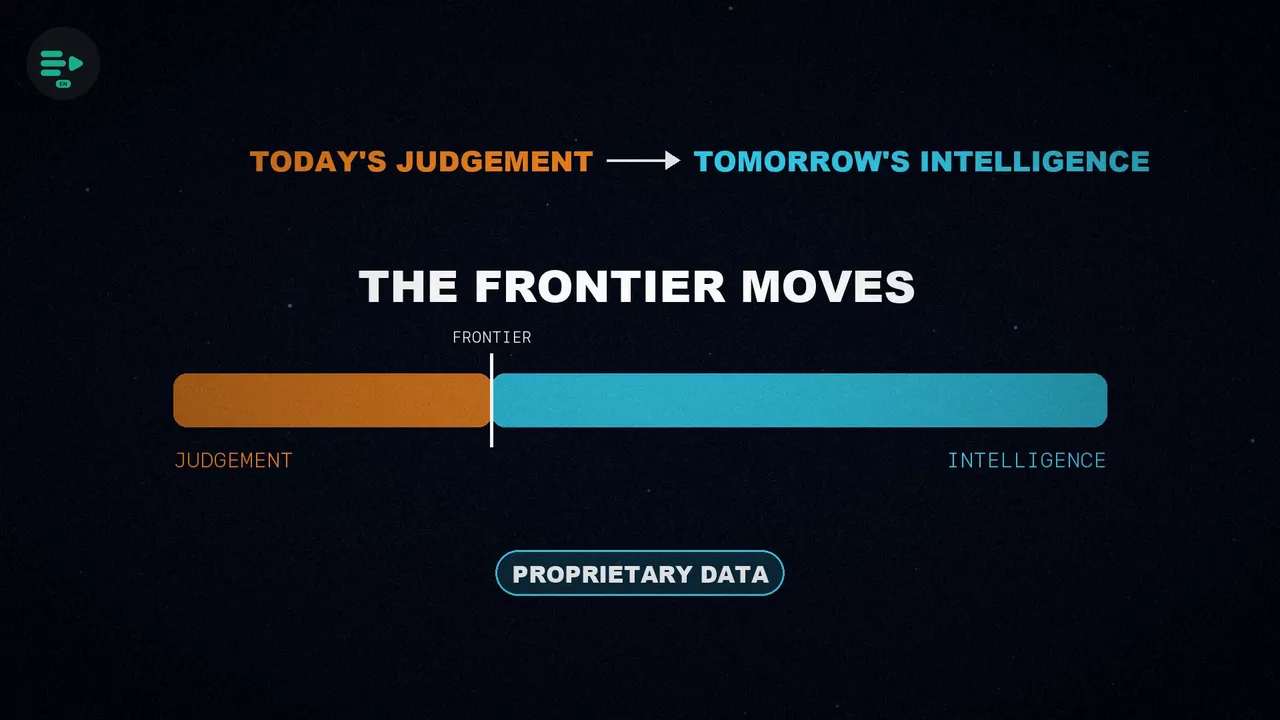
That's why the starting point matters: it decides where an autopilot can win customers today, and where it starts compounding the data that will eventually let it handle judgement too.
The playbook: outsourcing as the wedge
For every dollar spent on software, six are spent on services. An autopilot's total market is all the labor spend in a category, insourced and outsourced. But the right place to start is where outsourcing already exists, because an outsourced task tells you three things:
The company already accepts that someone else does this work.
There's a budget line that can be cleanly replaced.
The buyer already pays for the result, not for hours.
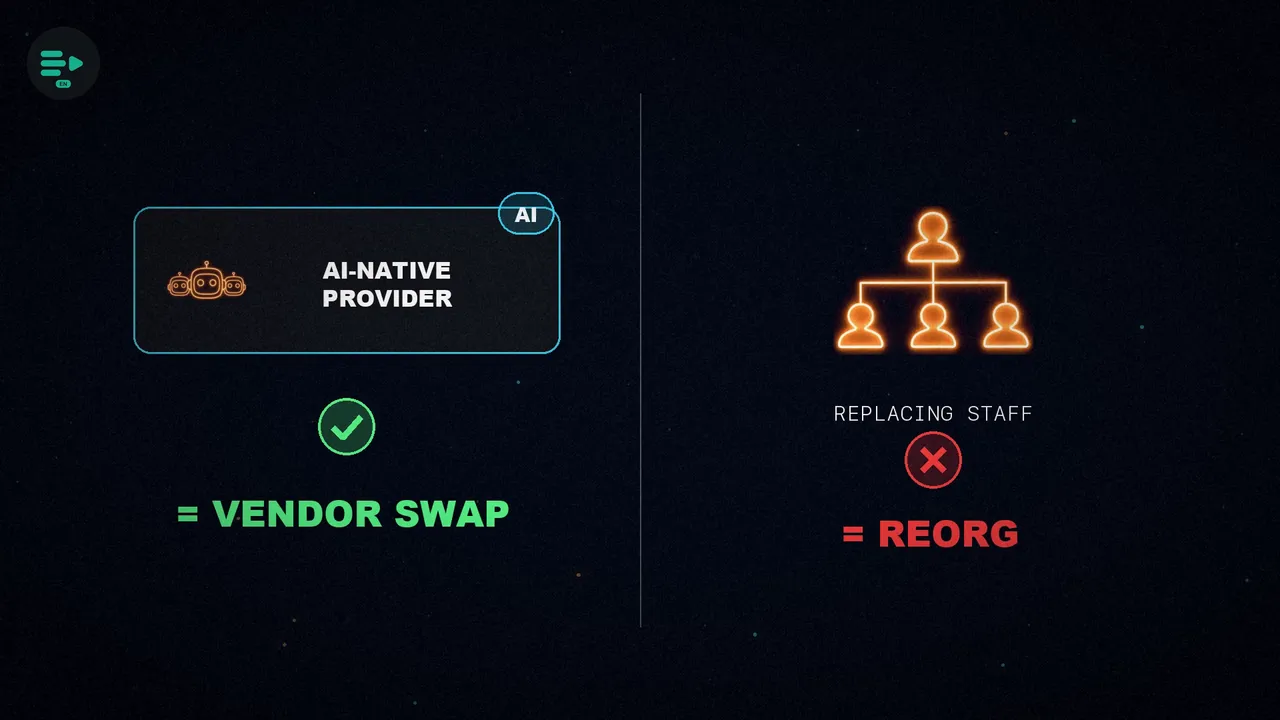
The practical difference is huge: replacing an outsourcing contract with an AI-native provider is a vendor swap; replacing headcount is a reorg.
So the playbook is: start with the outsourced, intelligence-heavy task, nail distribution, and expand toward insourced, judgement-heavy work as the AI compounds. The outsourced task is the wedge; the insourced work is the long-term market.
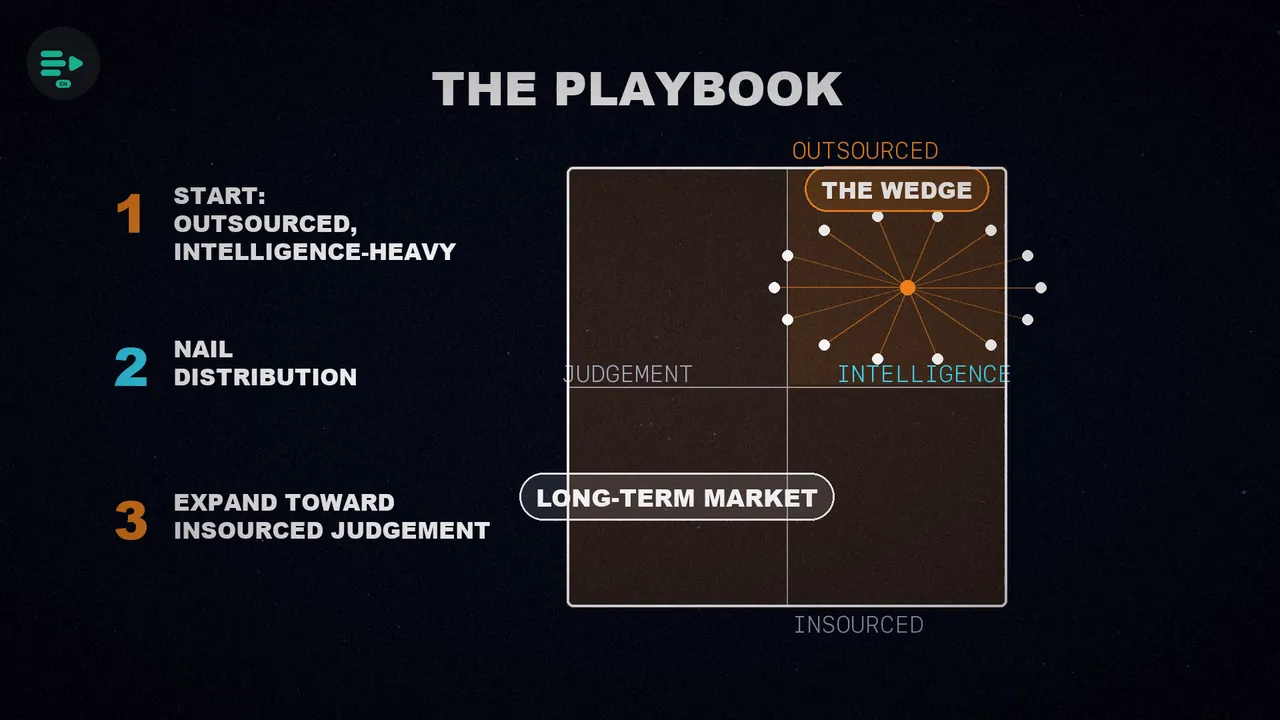
The example is Crosby, which started with NDAs: a well-defined task, mostly intelligence, that most companies already outsource to external counsel. The budget exists, the scope is clear, the ROI is immediate and the substitution is frictionless.
The opportunity map
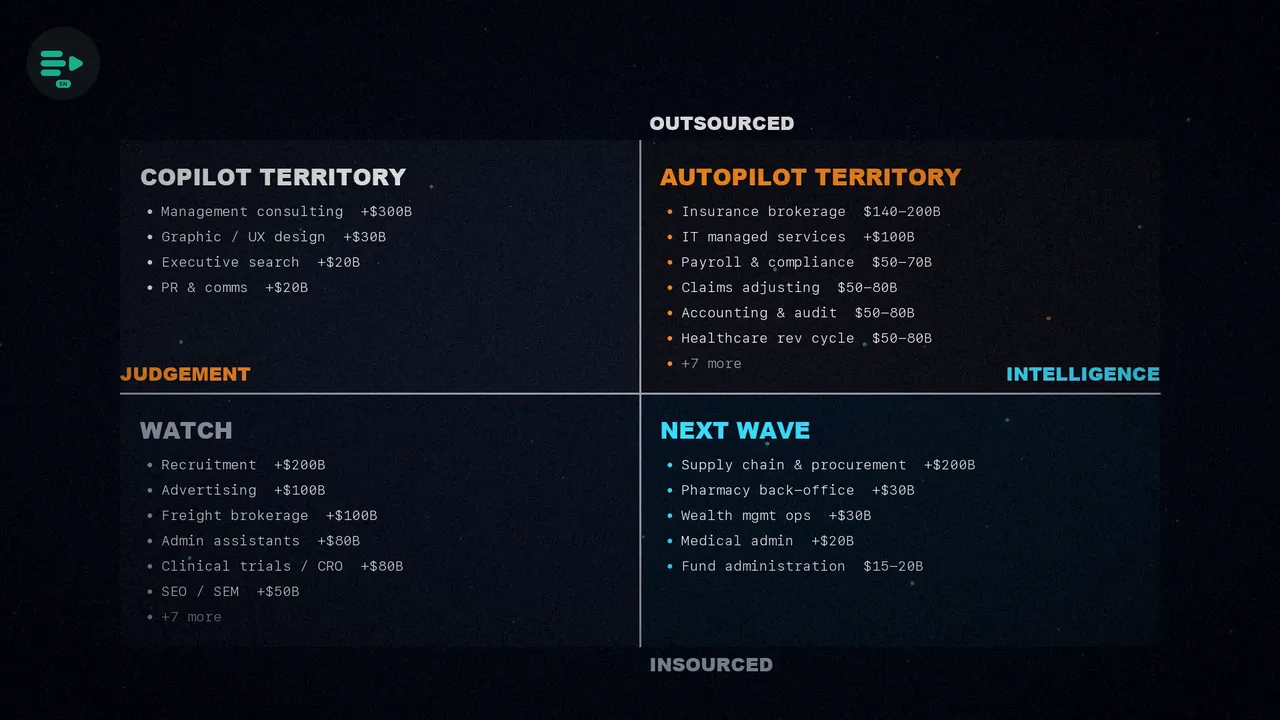
Bek plots every services vertical on two axes, from judgement to intelligence and from insourced to outsourced, with its labor spend. He presents it as an illustrative map:
- Autopilot territory (outsourced, intelligence): insurance brokerage, IT managed services, payroll, claims adjusting, accounting, healthcare revenue cycle, mortgage origination, tax advisory, transactional legal…
- Next wave (intelligence still done in-house): supply chain and procurement, pharmacy back-office, medical and fund administration.
- Copilot territory (outsourced, judgement): management consulting, design, executive search, PR.
- Watch (insourced, judgement): recruitment, advertising, freight brokerage, clinical trials, cybersecurity…
Sector by sector
The article walks through ten sectors. The figures are labor spend:
The largest in autopilot territory. Standard commercial lines are highly standardized: the broker shops across carriers and fills in forms. Tens of thousands of small brokers, so nobody owns the customer. WithCoverage and Harper.
Outsourced, in the US alone. Roughly 340,000 accountants lost in five years while demand grew, and 75% of CPAs are nearing retirement. Rillet is building the AI-native ERP; Basis started as a copilot.
It sounds like judgement, but billing is almost pure intelligence: translating clinical notes into about 70,000 ICD-10 codes. Outsourcing is mature and outcome-based. Anterior is furthest along.
The other side of the policy: interpreting policy language against damage schedules and setting reserves with actuarial tables. Adjusters are aging out. Pace and Strala.
Licensing is a regulatory moat, but 80-90% of the work is intelligence, and every new jurisdiction deepens the data moat. TaxGPT, Skalar and Ravical.
Contracts, NDAs and regulatory filings, standard enough that quality can be verified. Harvey is moving toward autopilot; Crosby and Lawhive were born that way.
Patching, monitoring, user provisioning and alert triage, repeated across thousands of identical environments. Nobody sells "your IT runs" directly to the company yet. Edra and Serval.
Most enterprises only negotiate seriously with their top 20% of suppliers, and contract leakage runs 2-5% of spend. Abandoned work means found money. Magentic, AskLio and Tacto.
Screening, matching and outreach are intelligence; closing a candidate and judging culture fit are judgement. The wedge is high-volume roles. Juicebox, Mercor and Jack & Jill.
Huge, but mostly judgement. The question is whether it can be split into an intelligence layer (data gathering, benchmarking) and a judgement layer (strategic recommendations). Bek doesn't name any standout startup yet.
The innovator's dilemma
In 2025, the fastest-growing AI companies were copilots. In 2026, many will try to become autopilots: they have the product and the customer knowledge. But they face the innovator's dilemma: their customer is the professional, and selling the work means cutting that customer out. That's the opening for pure-play autopilots.

If you sell the tool, you compete with the model; if you sell the work, every new model plays in your favor. Start with outsourced, intelligence-heavy work and grow toward judgement.
What work in your field do you think an autopilot will take over first?
Sources
- "Services: The New Software", by Julien Bek (@julienbek), Sequoia Capital, March 5, 2026.
- The video, on my three channels: Spanish, English and Portuguese.